Nature-based restoration systems that support the recovery of ecological function, stabilise vulnerable areas and create conditions for vegetation, biodiversity and healthier water systems.
The Challenge
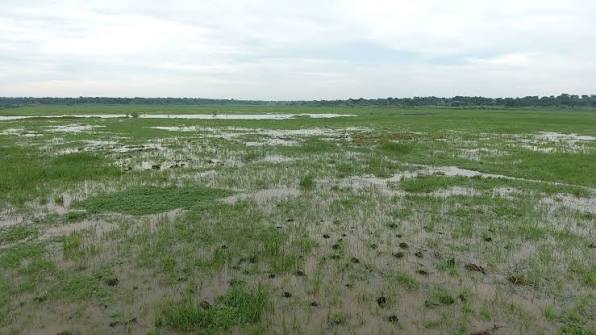
Wetlands and degraded ecosystems perform critical environmental functions, including water retention, filtration, habitat provision and biodiversity support. Disturbance, erosion, altered water regimes and human activity can progressively reduce these functions.
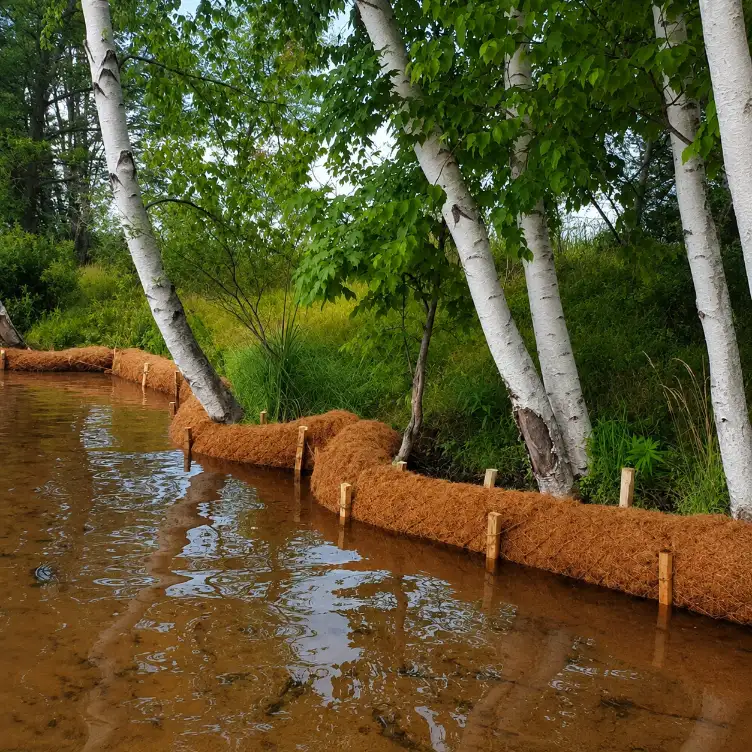
Loss of vegetated buffer zones around ponds, lakes and riparian areas
Soft, waterlogged soils that are slow to consolidate and support new planting
Degraded habitat quality for native flora and fauna
Restoration sites where synthetic materials would themselves introduce a long-term contamination risk
Our Solution
FloraVeld combines nature-based restoration systems, erosion control and vegetation strategies to create conditions in which ecological processes can recover. Because a geotextile can both convey water within its own plane and filter fine soil particles out of that flow, the same coir layer can drain a waterlogged site while holding the substrate in place — the intervention is tailored to the site's hydrology, soil conditions, existing ecology and restoration objectives.
Where It Applies
Wetlands
Ponds
Lakes
Riparian Areas
Degraded Landscapes
Ecological Restoration Sites
Wetlands
Ponds
Lakes
Riparian Areas
Degraded Landscapes
Ecological Restoration Sites
Technologies
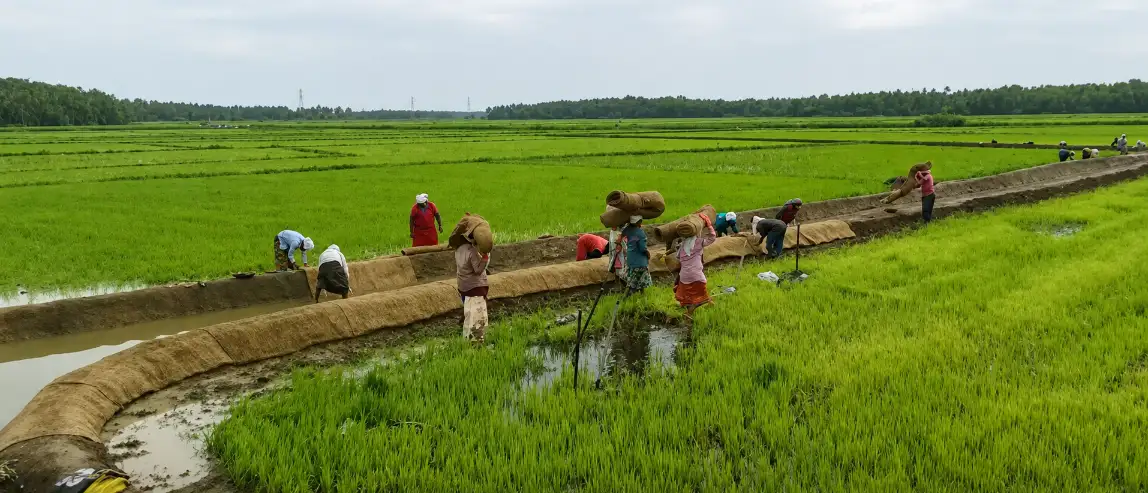
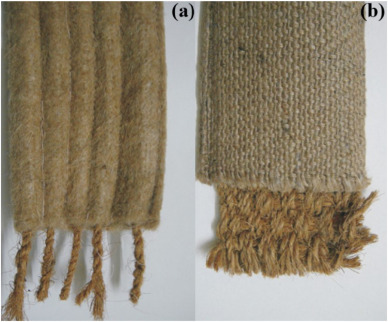
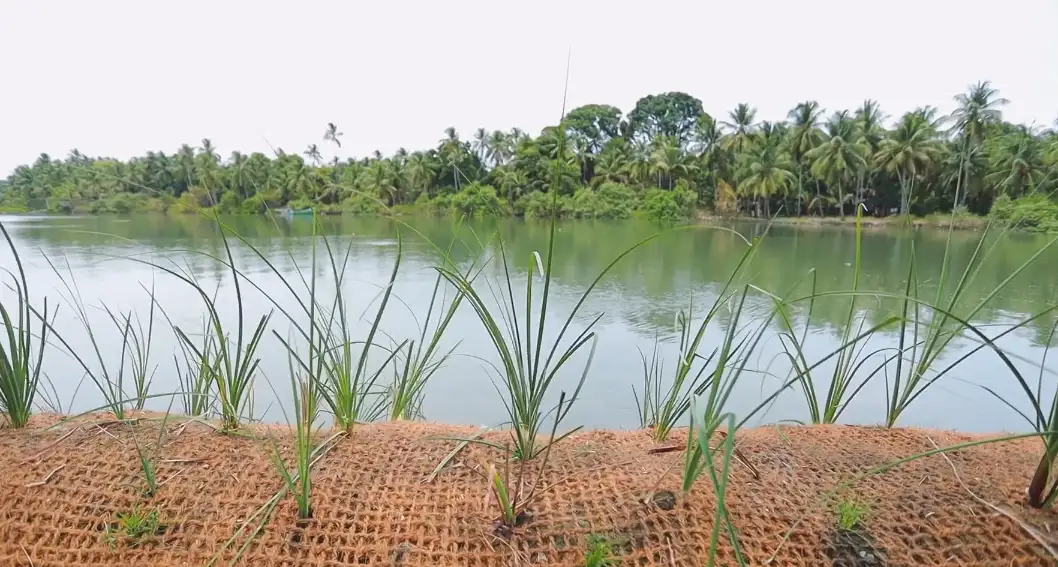
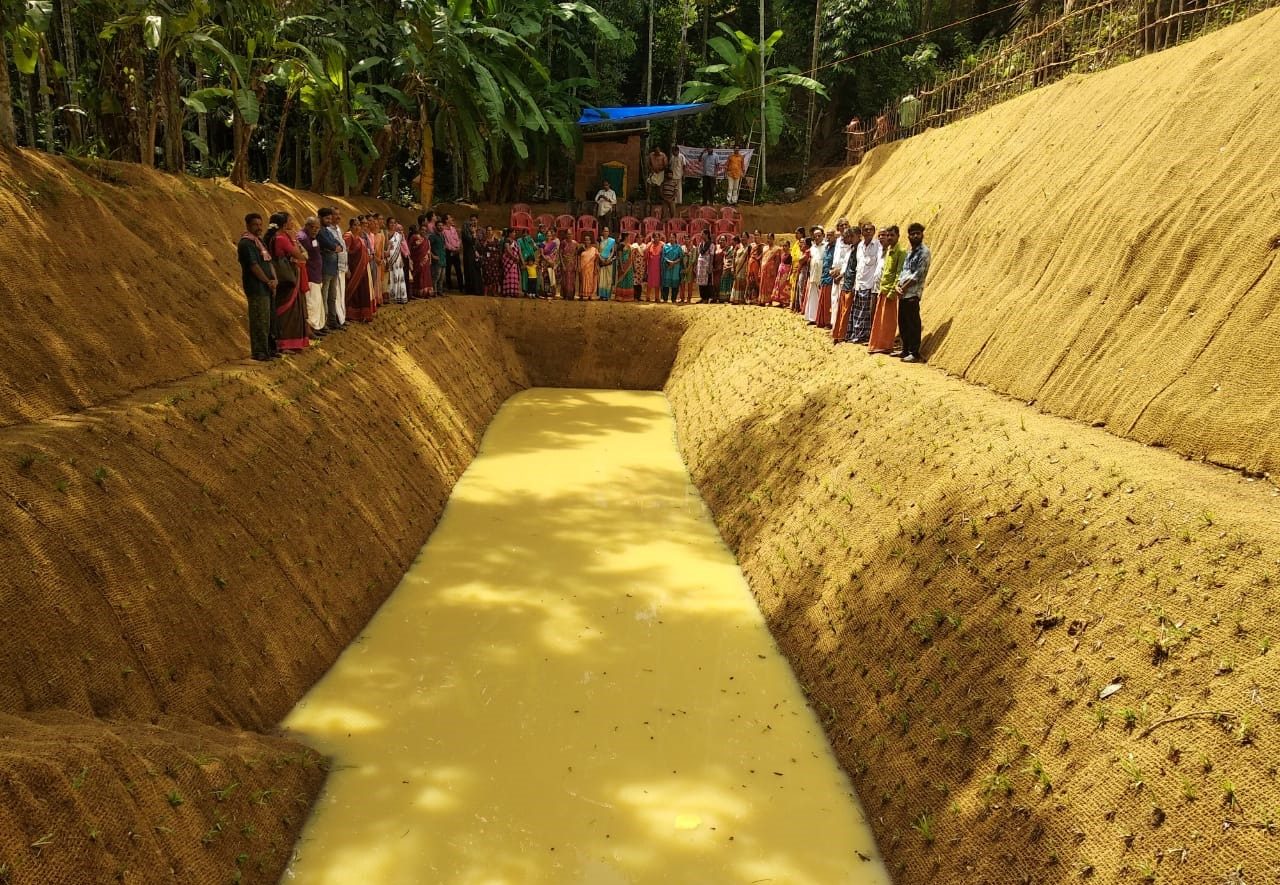
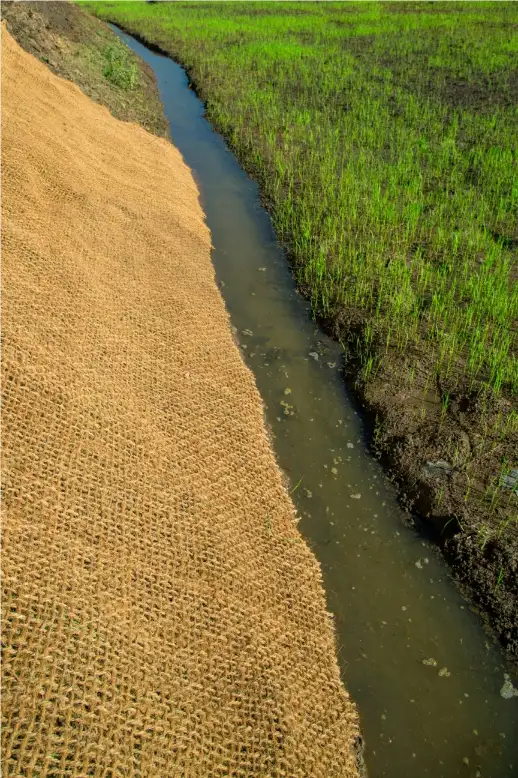
Coir Geotextiles & Mats
Erosion protection and vegetation support around wetland margins.
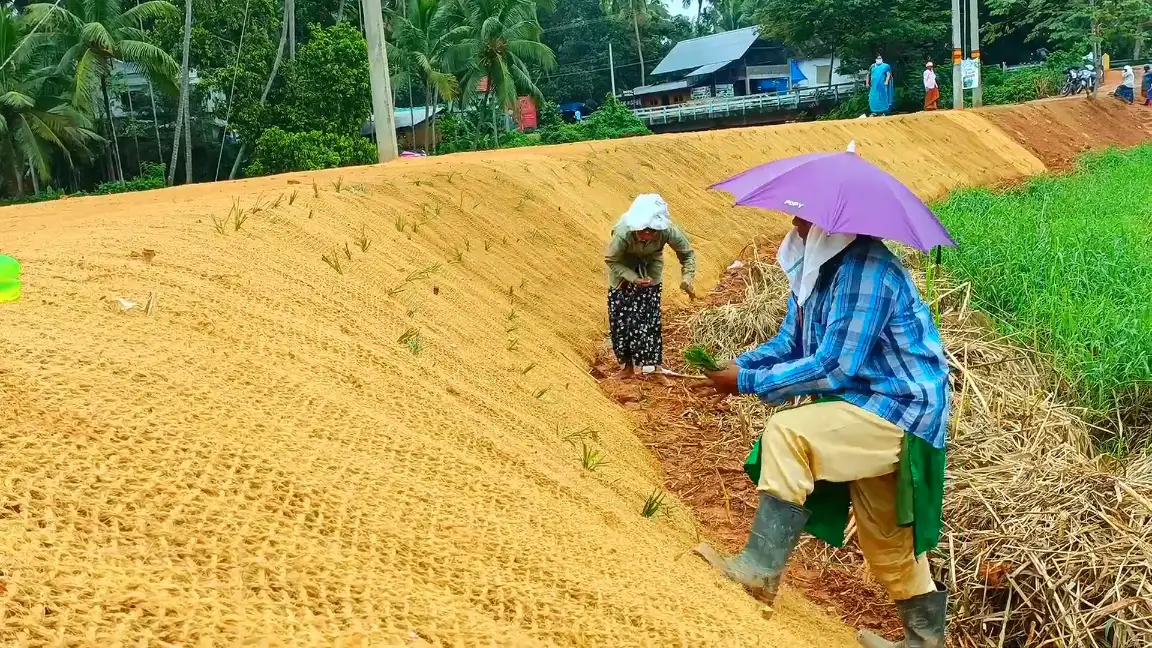
Coir cocolog Systems
Surface protection and vegetation establishment support.
Coir Wick Drains
Coir-cored drains inserted into soft, waterlogged ground to wick out excess water and accelerate consolidation, self-degrading once their function is complete.
Vegetation & Planting Systems
Ecological recovery and habitat establishment.
How It Works
Protect
Vulnerable soils and margins covered to prevent further erosion and sediment loss.
Re-establish
Wick drains and mulch systems used where consolidation of soft or waterlogged ground is needed.
Vegetate
Native planting introduced once the substrate is stable enough to support root growth.
Restore Function
As vegetation matures, water retention, filtration and habitat functions recover.
Key Benefits
Protection of vulnerable soils around ponds, wetlands and riparian corridors
Support for vegetation establishment and faster ground consolidation
Habitat recovery for native species
Support for ecological function - filtration, water retention and biodiversity
Improved landscape resilience to future disturbance
Natural, humus-forming integration with no material to remove at end of life
Request a Consultation
Tell us about your project — we'll be in touch within five business days.