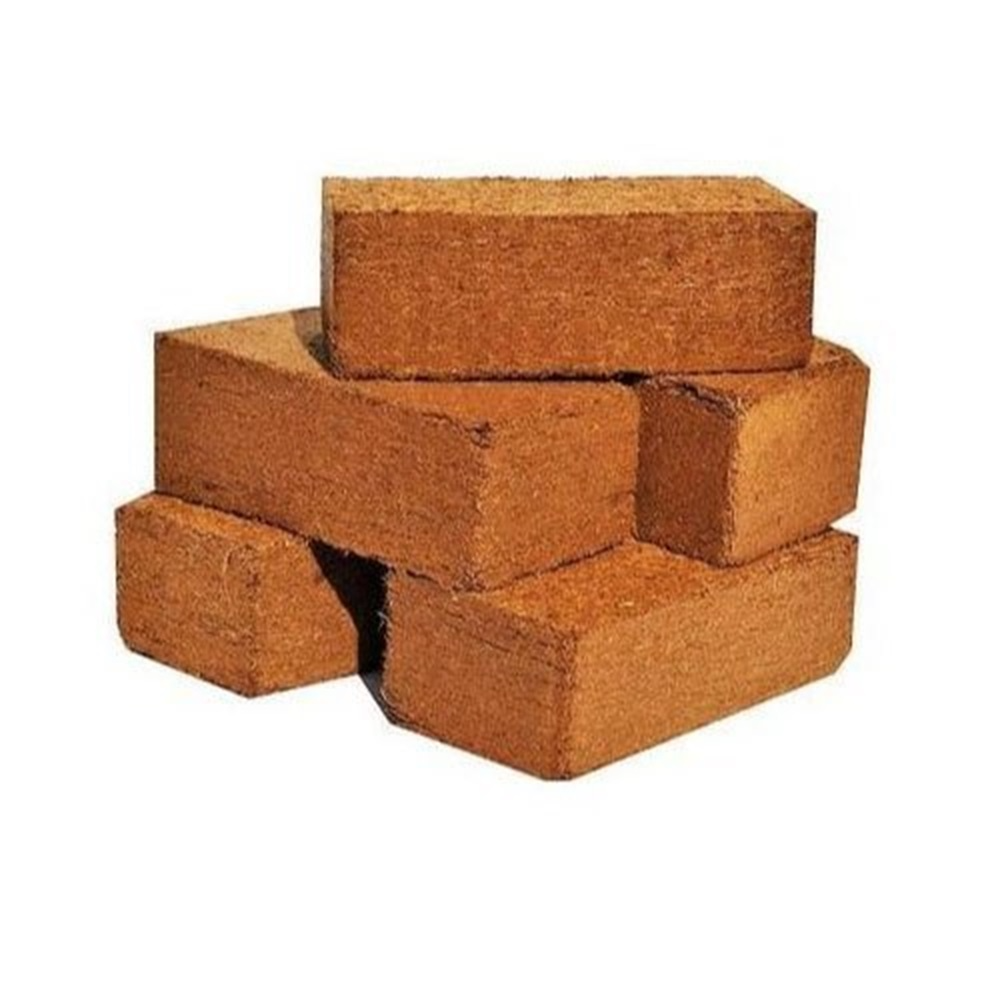
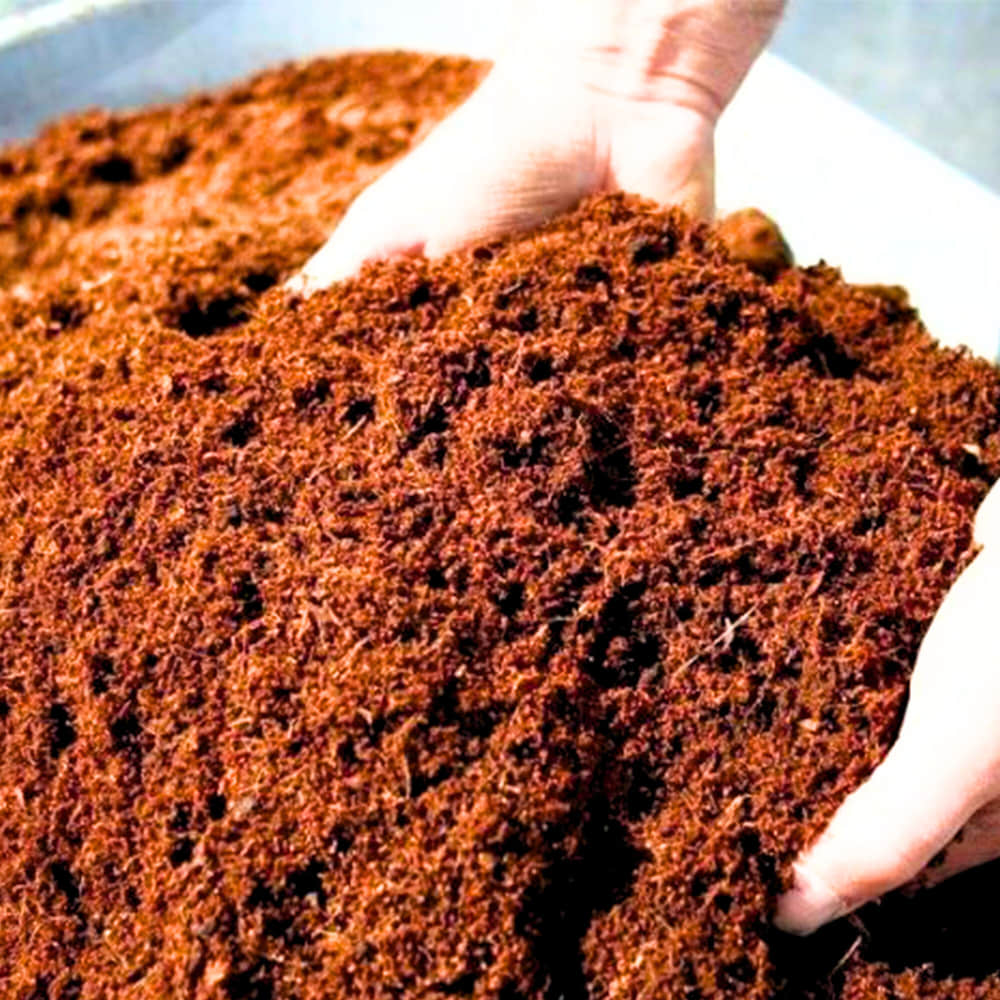
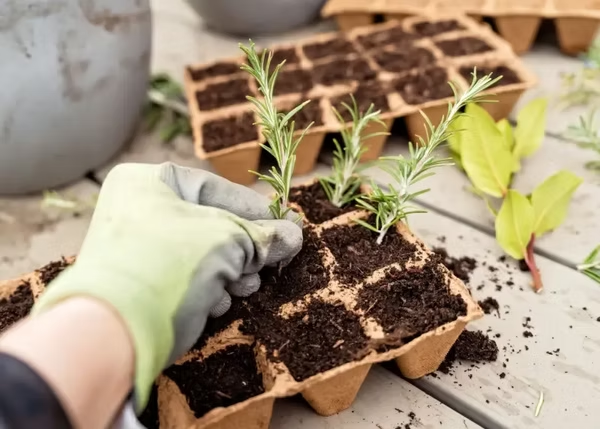
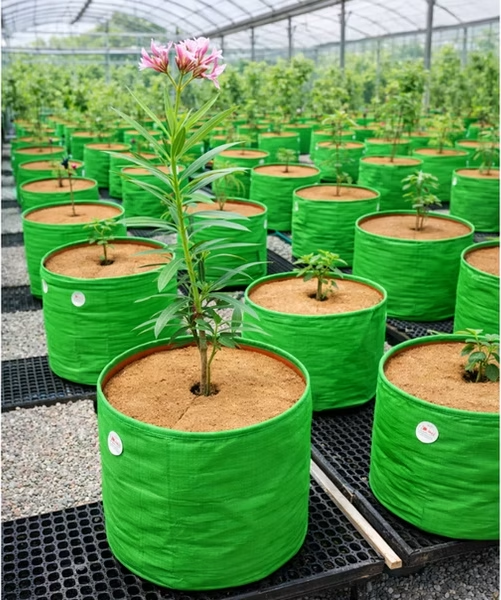
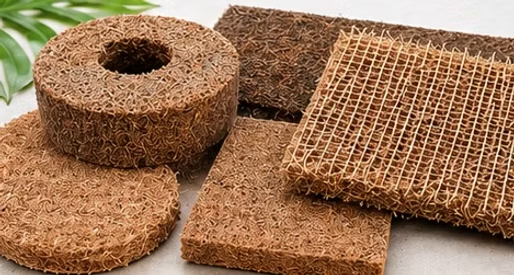
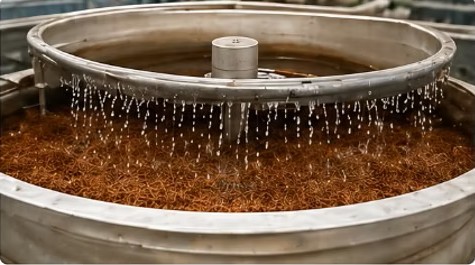
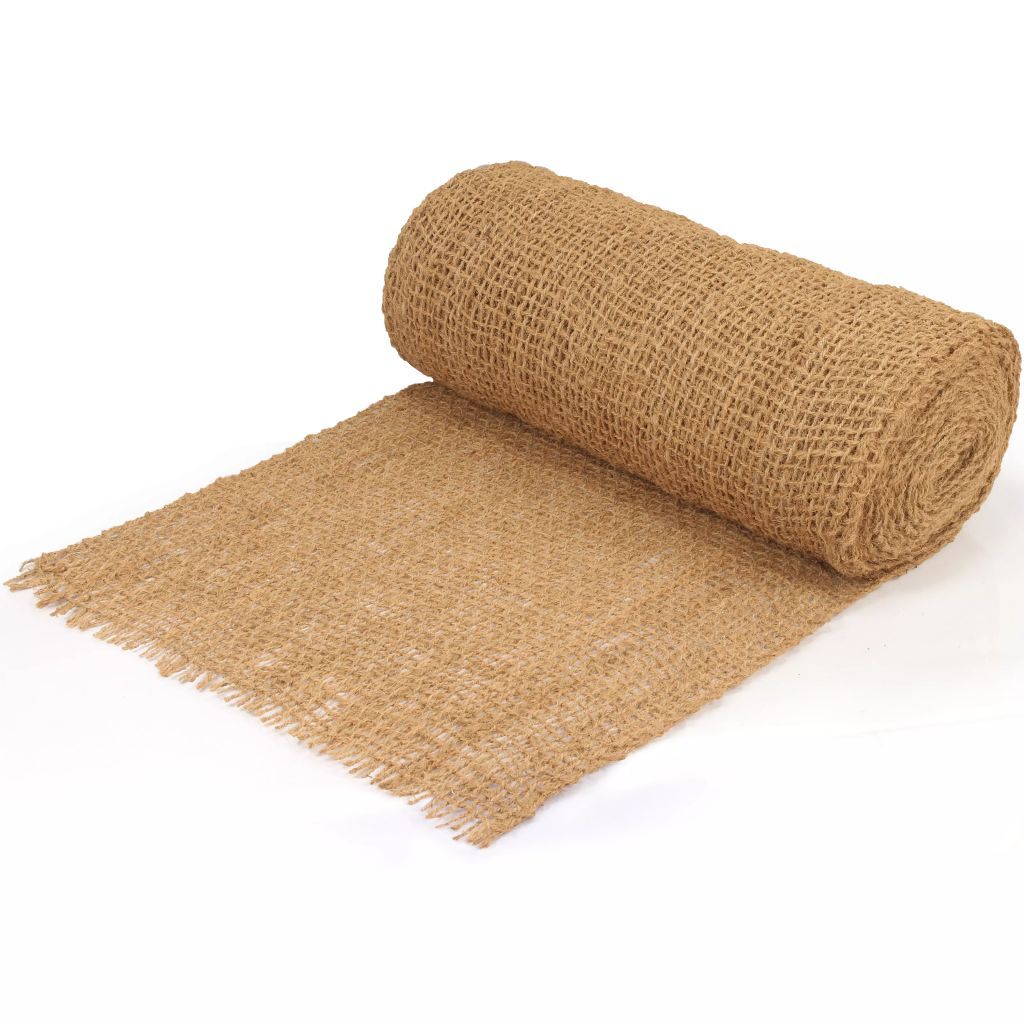
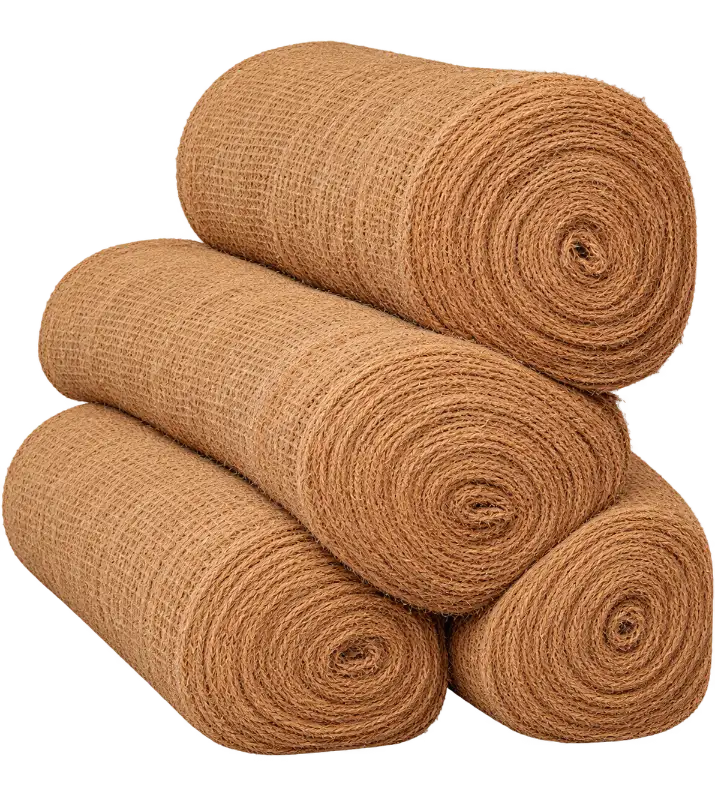
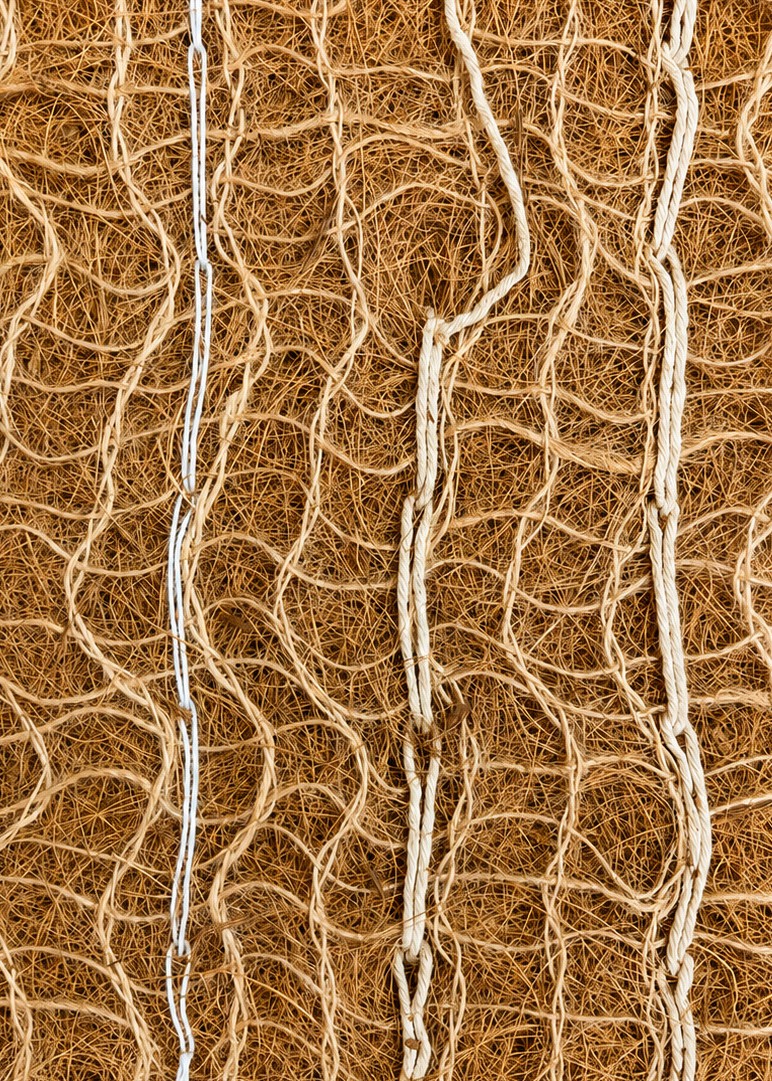
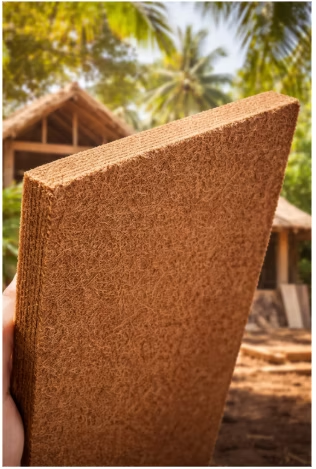
Coco peat (coir pith) is the fine, spongy material extracted from the coconut husk after the long fibres are removed. Washed, buffered and compressed into blocks or briquettes for transport, it rehydrates to many times its compressed volume and is used worldwide as a peat-alternative growing medium.
High water-holding capacity (up to 8–9 times its own weight) with good air-filled porosity
Renewable by-product of coconut processing - a genuine peat-bog alternative
Low and stable EC when washed/buffered, suited to salt-sensitive crops
Naturally slow to decompose, giving a stable structure over a full growing season
Encourages beneficial root development and mycorrhizal activity
Available in low-EC (washed) and standard (unwashed) grades
Material : 100% coconut coir pith (coir dust)
Form/Type : Compressed block, briquette, or loose bag
Dimensions : 5 kg block(30x30x15 cm) expands to approx. 60–75 litres; also supplied as 650 g, 1 kg and 250 kg bales
Density/GSM : Compressed bulk density approx. 350–400 kg/m3; expanded bulk density approx. 70-80 kg/m3
Key mechanical property : EC (1:1.5 extract) 0.3-0.9mS/cm for washed ,1.5-4mS/cm for unwashed; pH 5.5–6.8
Lifespan / Degradation period : Stable growing structure for 6–12 months; fully compostable thereafter
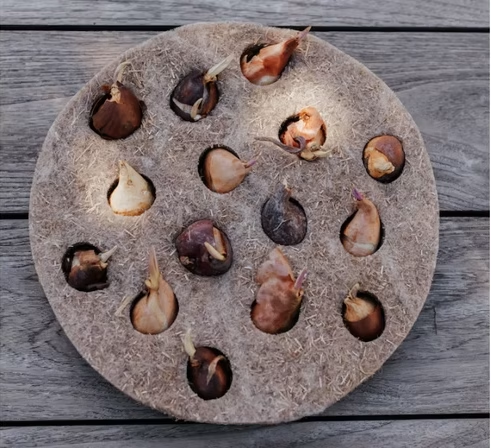
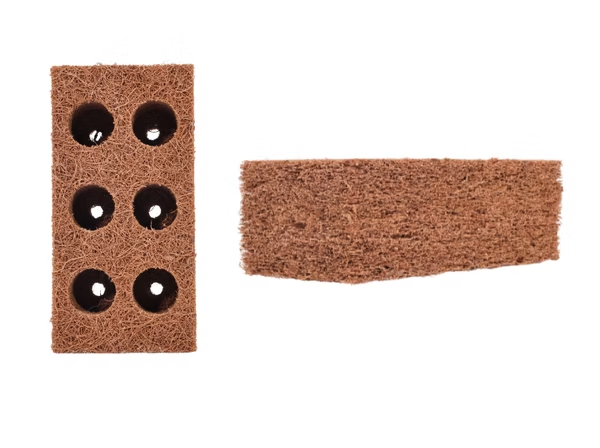
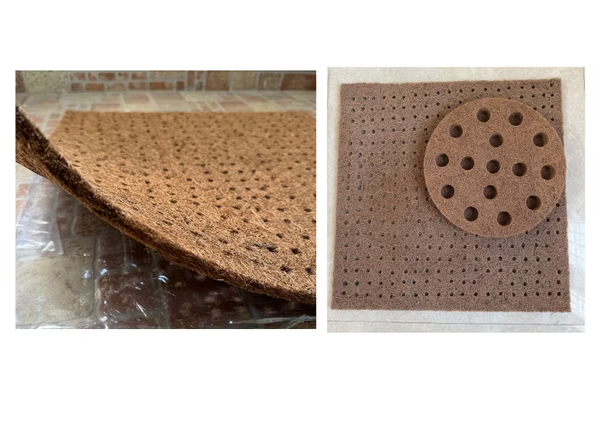
Coir Grow Pad & Sheets ( FV-HOR-002 )
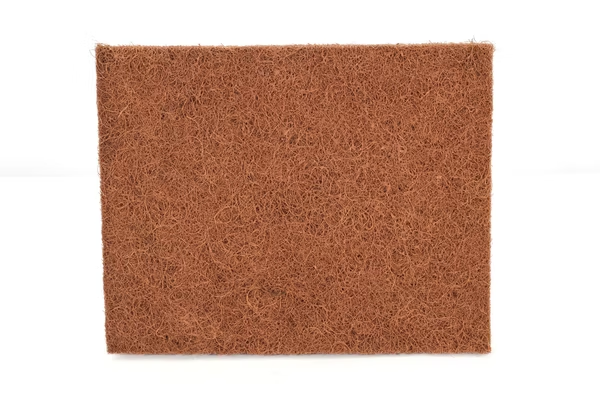
Coir grow pads are thin, pre holed flat pads of pressed coir fibre or rubberised coir sheets used as a soil-free growing surface, most commonly for nursery beds, sprouts and hydroponic cultivation. They provide a clean, sterile, biodegradable medium that holds moisture evenly across the tray.
Key mechanical property : Water holding capacity approx. 5–6 times dry weight
Lifespan / Degradation period : Single/short growing cycle use (7–21 days); fully compostable
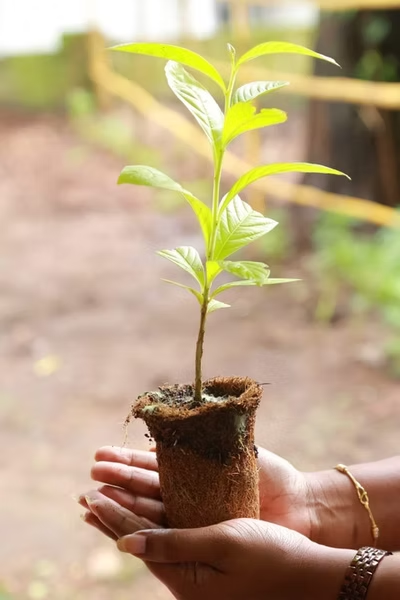
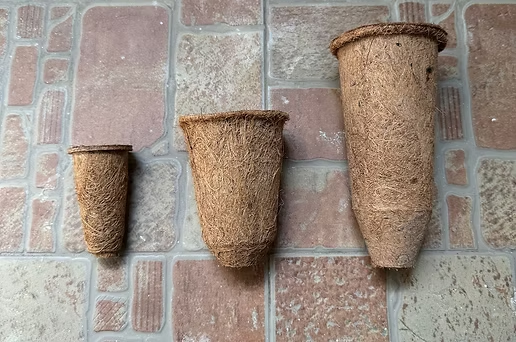
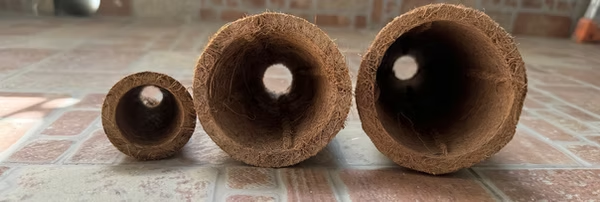
Coir Root Trainers ( FV-HOR-003 )
Coir root trainers are rigid, biodegradable tubes or cell-inserts made from compressed coir fibre, designed to encourage straight, well-branched root development in tree and shrub seedlings prior to planting out. Because the walls are porous and biodegradable, roots can be planted directly without transplant shock.
Uses: forestry and tree seedling nurseries, shrub and hedge propagation, restoration planting programmes, wholesale nursery production
Specification:
Distinctive properties
Air-pruning porous walls prevent root spiralling common in plastic pots
Plant directly into the ground - reduces transplant shock and labour
Fully biodegradable, eliminating plastic pot waste and disposal cost
Rigid enough for repeated handling and stacking during nursery production
Encourages deep, fibrous root systems for higher field survival rates
Material : Compressed coir fibre with natural binder
Form/Type : Rigid tube/tapered shape with open drainage base
Dimensions : 60ml, 150ml, 300ml
Key mechanical property : Wall strength: retains form through 6–9 months of nursery handling before controlled degradation
Lifespan / Degradation period : Degrades within 6–18 months once planted in soil
Coir Seedling Trays ( FV-HOR-004 )
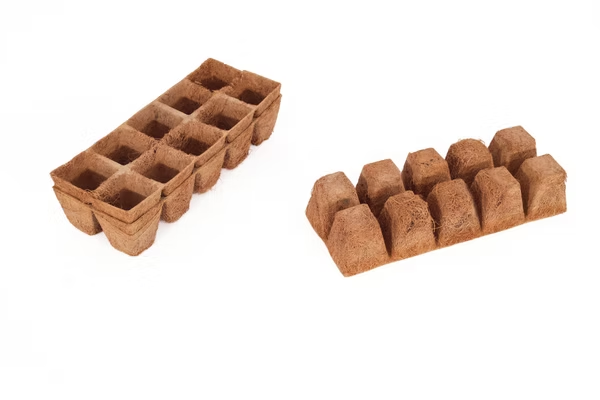
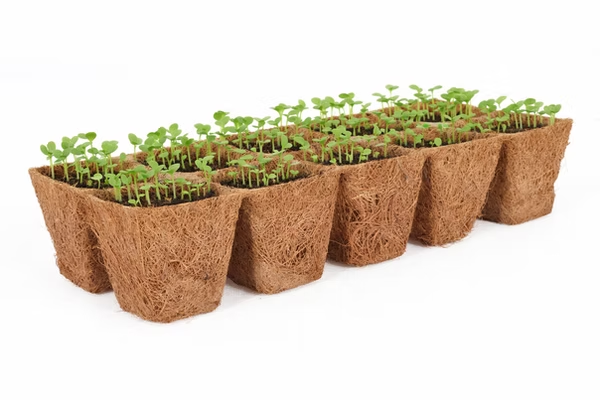
Coir seedling trays are moulded, multi-cell propagation trays made from compressed coir fibre, replacing plastic plug trays for raising vegetable, flower and forestry seedlings from sowing through to transplant.
Uses: vegetable and flower bedding plant production, forestry seedling propagation, school and community gardening programmes, plug-plant wholesale nurseries
Specification:
Distinctive properties
Biodegradable - trays can be planted whole or composted after use
Reduces plastic tray waste and washing/sterilising labour
Good moisture wicking between cells reduces overwatering risk
Stackable and dimensionally stable for mechanised sowing lines
Material : Moulded compressed coir fibre
Form/Type : Multi-cell tray
Dimensions : Customisable cell configurations (standard multi cell format)
Density/GSM : Wall density approx. 350–500 kg/m3
Key mechanical property : Cell wall integrity maintained through 4–10 week production cycle before biodegrading
Lifespan / Degradation period : Degrades within 6–12 months once planted or composted
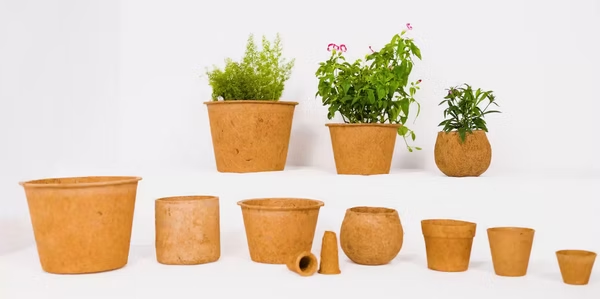
Coir Pots ( FV-HOR-005 )
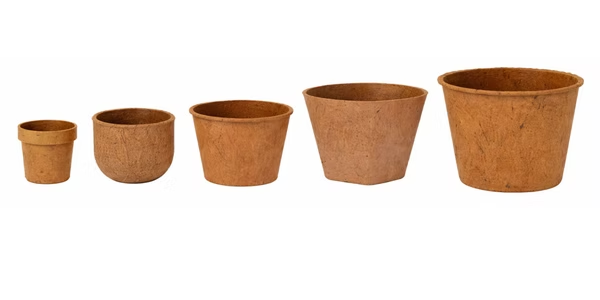
Coir pots are biodegradable plant pots pressed from coir fibre and natural latex/starch binder, used as a direct plastic-pot replacement for growing on seedlings, herbs and potted plants for retail sale.
Uses: retail potted plants and herbs, bedding plant production, nursery growing-on, gifting and event planting
Specification:
Distinctive properties
Fully biodegradable and plantable - roots grow directly through the pot wall
Breathable wall improves root aeration versus solid plastic pots
Rigid enough for retail handling, transport and shelf display
Reduces single-use plastic pot volumes in the horticulture supply chain
Naturally attractive brown finish suited to premium retail presentation
Material : Pressed coir fibre with natural binder
Form/Type : Round or square pot
Dimensions : Diameters 2.5” – 10” ( customisable)
Key mechanical property : Load-bearing: holds full growing medium and plant weight for 3–9 months retail/growing life
Lifespan / Degradation period : Degrades within 6–12 months once planted
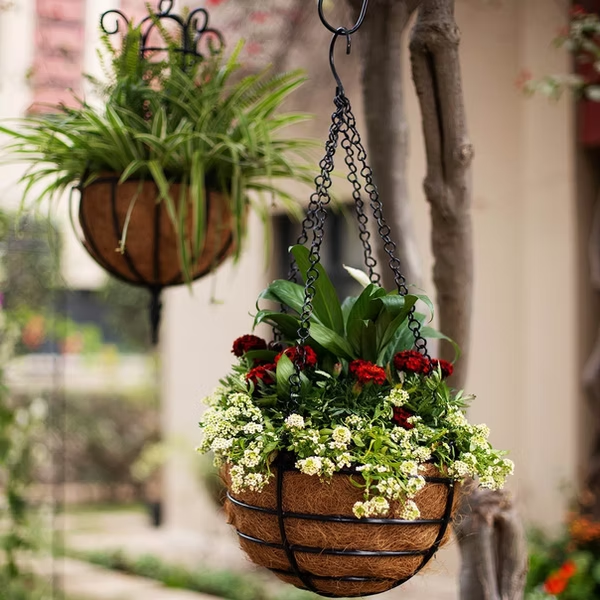
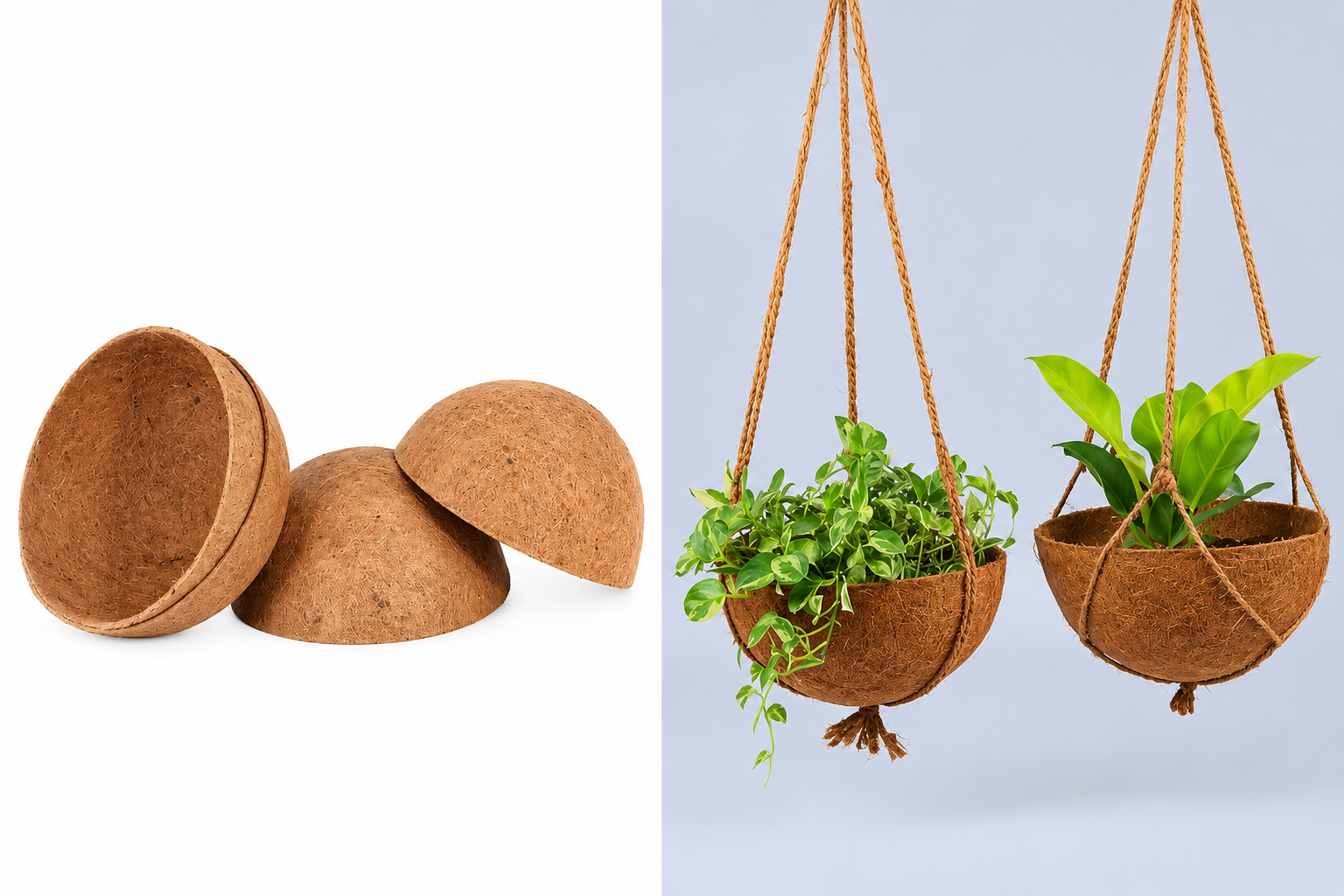
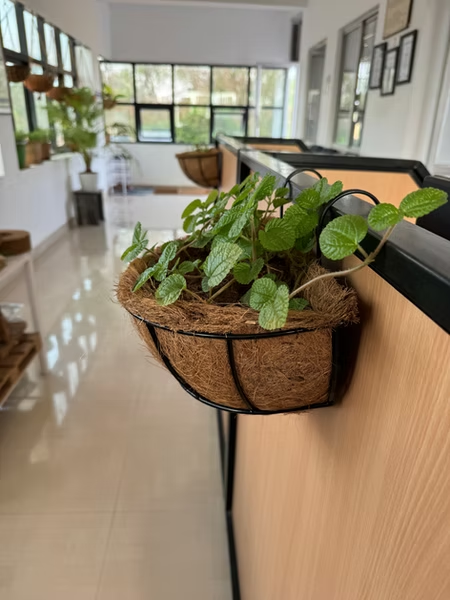
Coco Basket Liners ( FV-HOR-006 )
Coco basket liners are pre-formed or roll-cut coir fibre liners used to line wire and metal hanging baskets, giving a natural, moisture-retentive base for planting while allowing excess water to drain freely.
Uses: hanging basket planting, retail garden centre displays, public realm and street furniture planting, balcony and patio containers
Specification:
Distinctive properties
Natural, attractive finish that complements ornamental planting
Retains moisture while allowing free drainage, reducing root rot risk
Pre-formed shapes fit standard basket sizes with minimal trimming
Fully biodegradable and compostable at end of life
UV-tolerant surface fibre resists rapid breakdown in sun exposure
Material : Compressed/felted coir fibre
Form/Type : Pre-formed basket liner
Dimensions : Standard round liners from 6” – 16” (customisable)
Key mechanical property : Water retention with free drainage; typical service life one full growing season
Lifespan / Degradation period : Degrades within 9–12 months
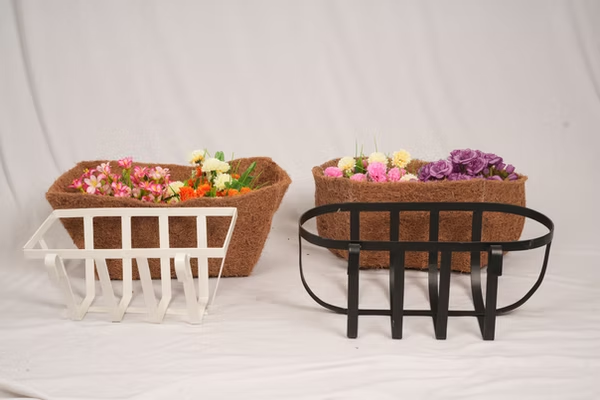
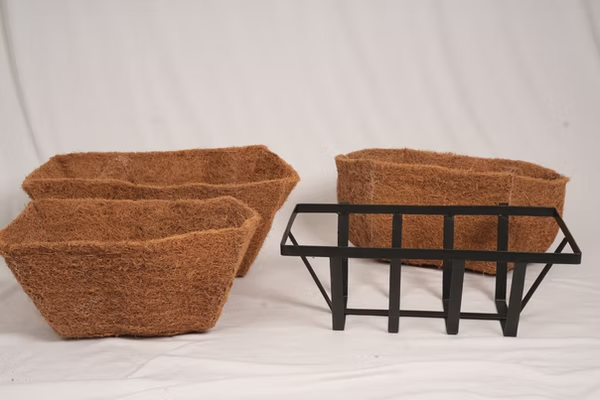
Coco Trough Liners ( FV-HOR-007 )
Coco trough liners are heavier-gauge coir fibre liners cut and shaped for window boxes, troughs and planter boxes, providing the same natural drainage and moisture-retention benefits as basket liners in a rectangular format.
Uses:window box and trough planting, commercial landscaping planters, street and public realm greening, balcony planters
Specification:
Distinctive properties
Custom-cut to fit standard trough and window box dimensions
Balances moisture retention with free drainage for healthier root zones
Durable enough for a full outdoor growing season
Fully biodegradable, reducing plastic liner waste
Natural finish suited to heritage and public realm settings
Material : Compressed/felted coir fibre
Form/Type : Pre-cut rectangular liner with supporting metal grill frame
Key mechanical property : Service life approx. one growing season under continuous moisture load
Lifespan / Degradation period : Degrades within 12–18 months
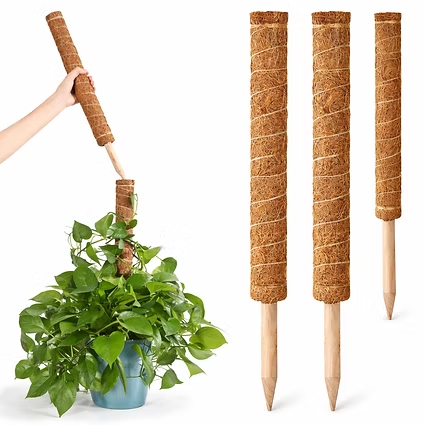
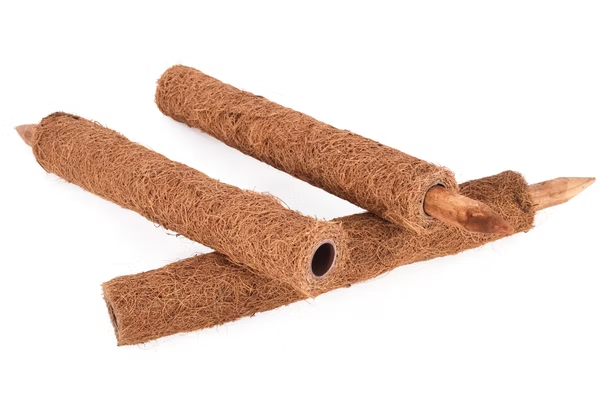
Coco Poles ( FV-HOR-008 )
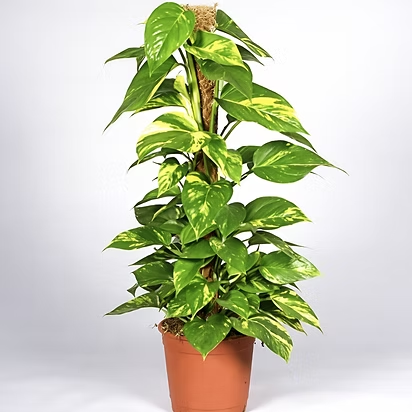
Coco poles are rigid support stakes wrapped in coir fibre matting around a wooden or bamboo core, used to support climbing plants and provide a natural rooting surface for aerial/moss-loving species such as philodendrons and monstera.
Uses: houseplant and climbing plant support, moss-pole alternative for aroids, vine and creeper training in nurseries and landscaping, orchid mounting
Specification:
Distinctive properties
Retains moisture on its surface, supporting aerial root growth of climbing houseplants
Natural fibre grip helps plant tendrils and aerial roots attach without damage
Sturdy core provides structural support as plants mature and gain weight
Fully biodegradable and free of the plastic mesh used in some moss poles
Available in a range of heights for different plant growth stages
Material : Coir fibre wrap around wood/bamboo or coir-composite core
Lifespan / Degradation period : Functional life 2–4 years indoors; biodegrades fully thereafter
Microgreen Grow Mats ( FV-HOR-009 )
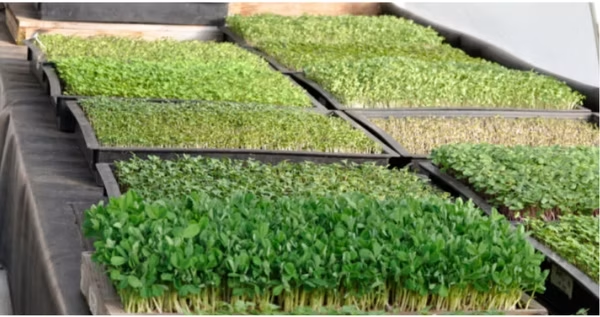
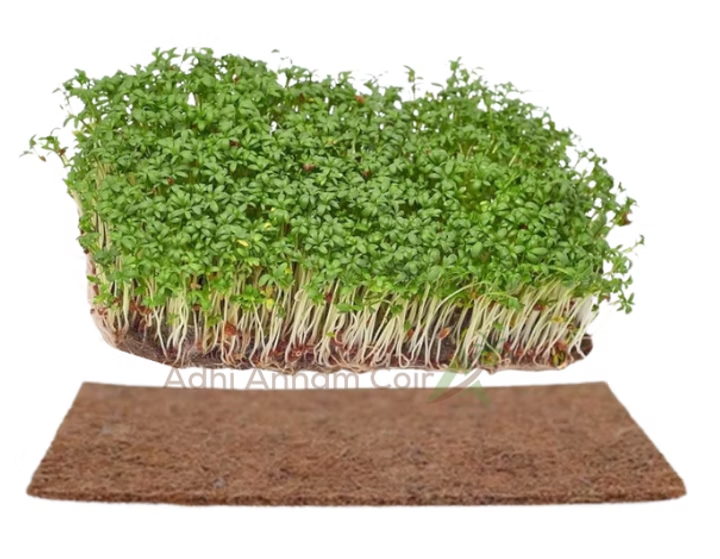
Microgreen grow mats are thin, dense coir fibre pads specifically engineered for fast microgreen crop cycles, offering rapid, even water uptake and a clean root environment for harvesting without soil residue.
Uses: commercial and home microgreen production, vertical and indoor farming, sprout growing trays, culinary garnish production
Specification:
Distinctive properties
Rapid, even capillary water uptake suited to short 7–14 day crop cycles
Clean-cut harvest with no soil residue on the crop
Dimensions : Customisable to fit standard microgreen trays
Key mechanical property : Water holding capacity approx. 4–5 times dry weight; even wicking across full mat
Lifespan / Degradation period : Single crop-cycle use (7–14 days); fully compostable
Mulching Mats/ Weed prevention mat ( FV-HOR-010 )
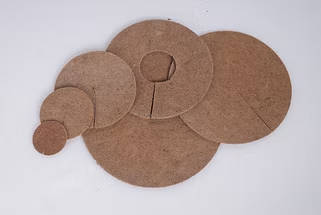
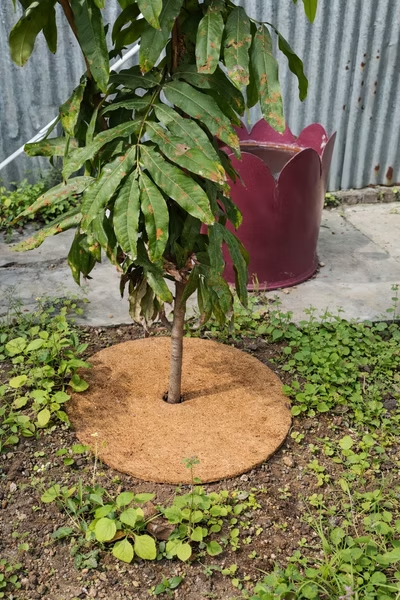
Mulching mats are lightweight, loosely bonded coir fibre mats used as an organic mulch layer around trees, shrubs and new plantings. They suppress weed growth and retain soil moisture while slowly composting into the surrounding soil, replacing plastic weed membranes and bark mulch in many landscaping applications.
Uses: tree and shrub planting, landscaping and public realm planting beds, orchard and vineyard ground cover, urban street tree pits
Specification:
Distinctive properties
Suppresses weed germination by blocking light
Retains soil moisture, reducing irrigation frequency
Moderates soil temperature for root establishment
Composts naturally, enriching soil organic matter over time
Free of plastic — avoids microplastic shedding of synthetic mulch mats
Material : Loose/carded coir fibre, lightly needle-bonded
Form/Type : Flat mat/disc, precut collars available
Key mechanical property : Weed suppression: reduces weed emergence by an estimated 80–90% versus bare soil
Lifespan / Degradation period : Composts within 12–18 months
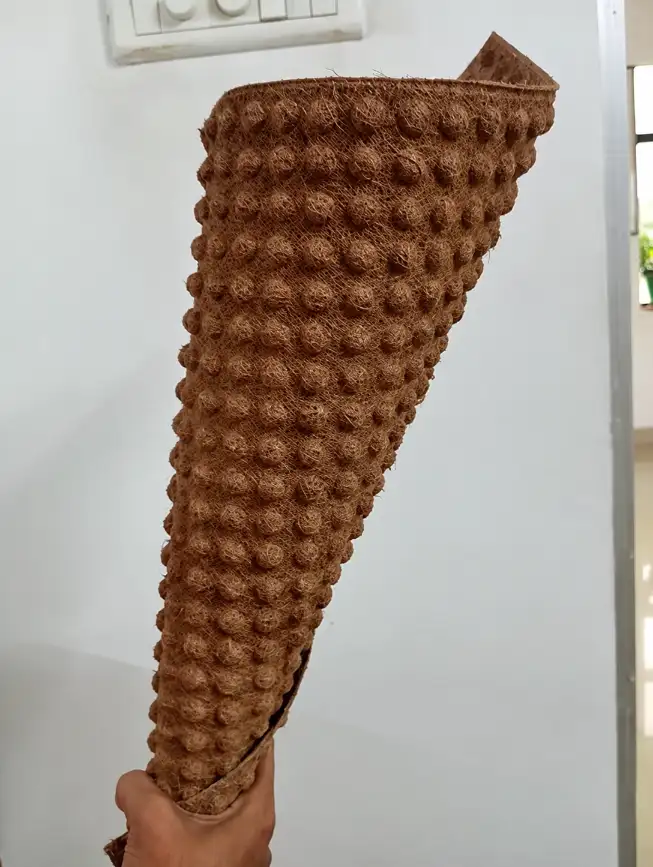
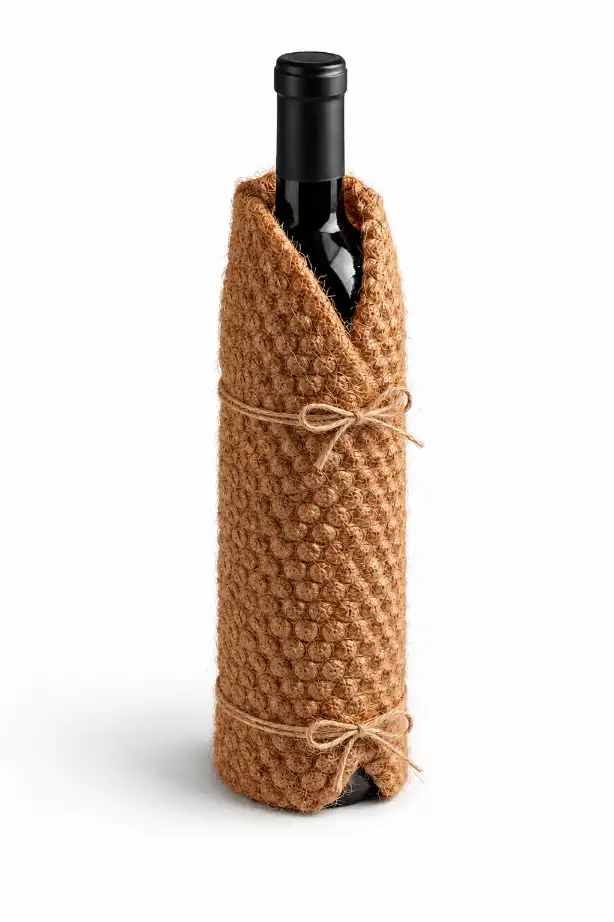
Coir Bubble Wrap ( FV-PKG-001 )
Coir bubble wrap is a cushioning roll material in which coir fibre is bonded using natural latex to create raised, cushioning pockets -replacing plastic bubble wrap with a compostable, natural-fibre equivalent.
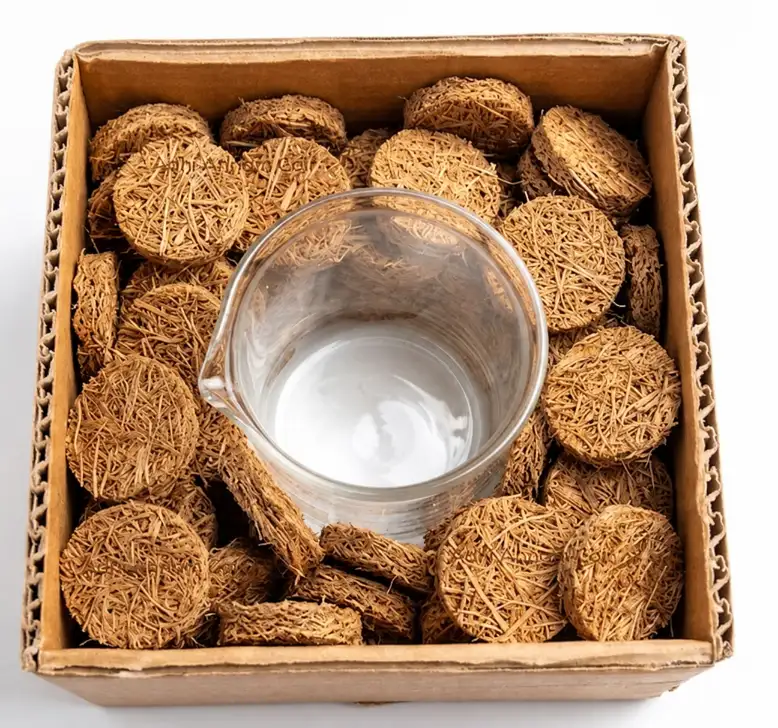
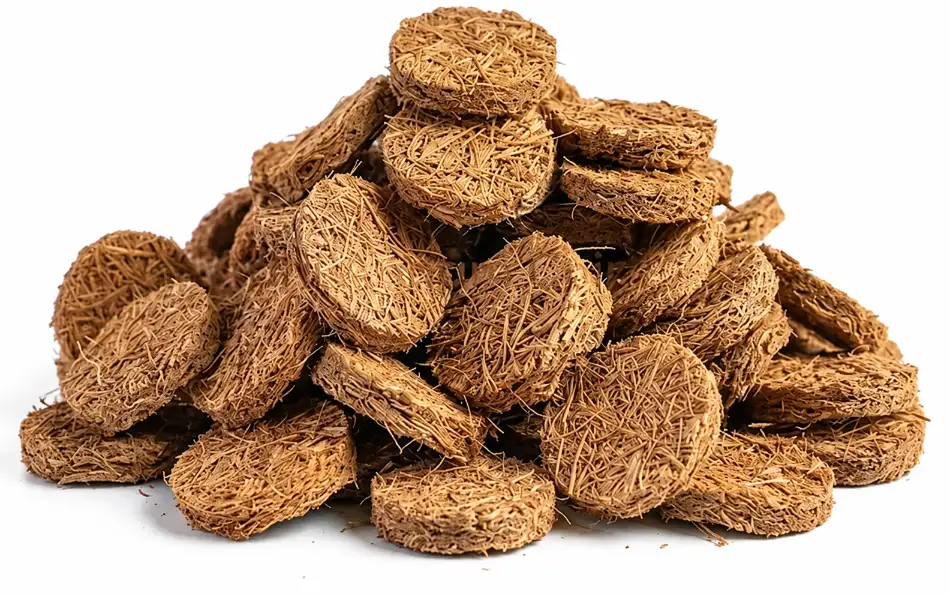
Coir void fillers are loose, lightweight chips/nuggets used to fill empty space within shipping cartons, preventing product movement during transit. They provide the cushioning function of plastic packing peanuts without the polystyrene.
Uses: e-commerce and mail-order packaging, fragile goods carton filling, electronics and glassware shipping, moving and storage
Naturally resists static build-up compared with plastic peanuts
Absorbs minor moisture without collapsing structurally
Reusable multiple times before composting
Material :Natural coir fibre chips/nuggets
Form/Type : Bulk loose fill
Dimensions : Customisable
Key mechanical property : Cushioning: absorbs impact equivalent to standard EPS peanuts at comparable fill volume
Lifespan/Degradation period : Cushioning: Compostable within 3–6 months
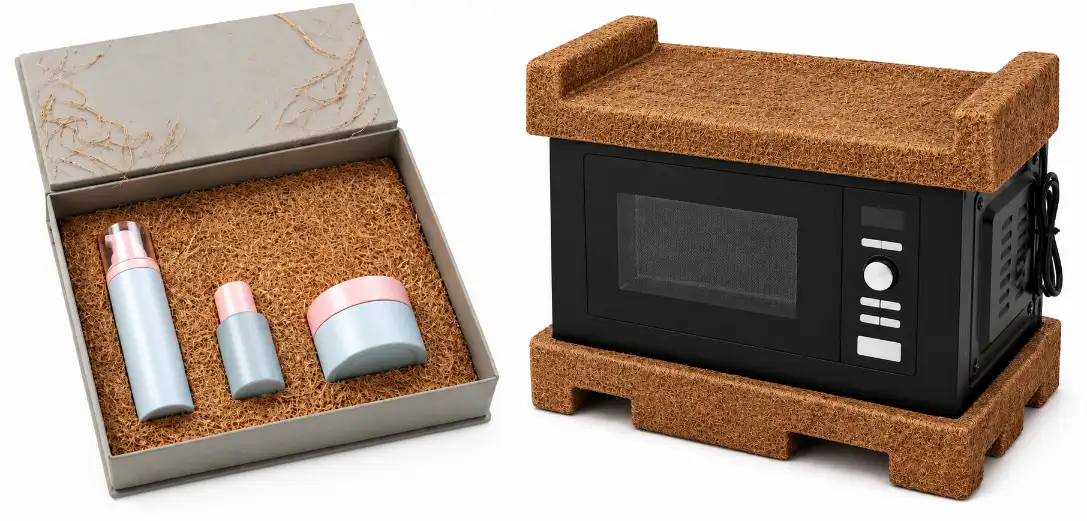
Coir Fitted Cushion ( FV-PKG-003 )
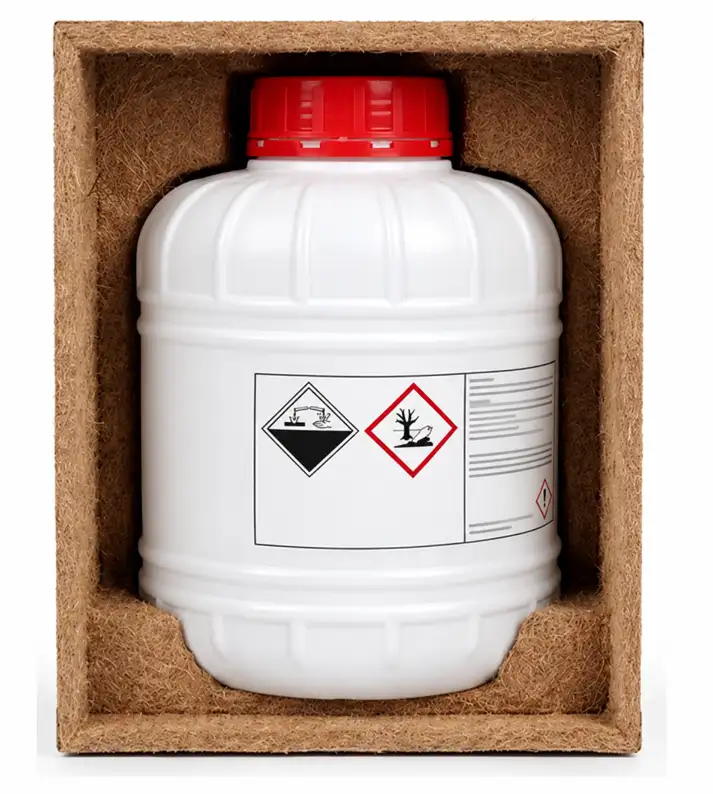
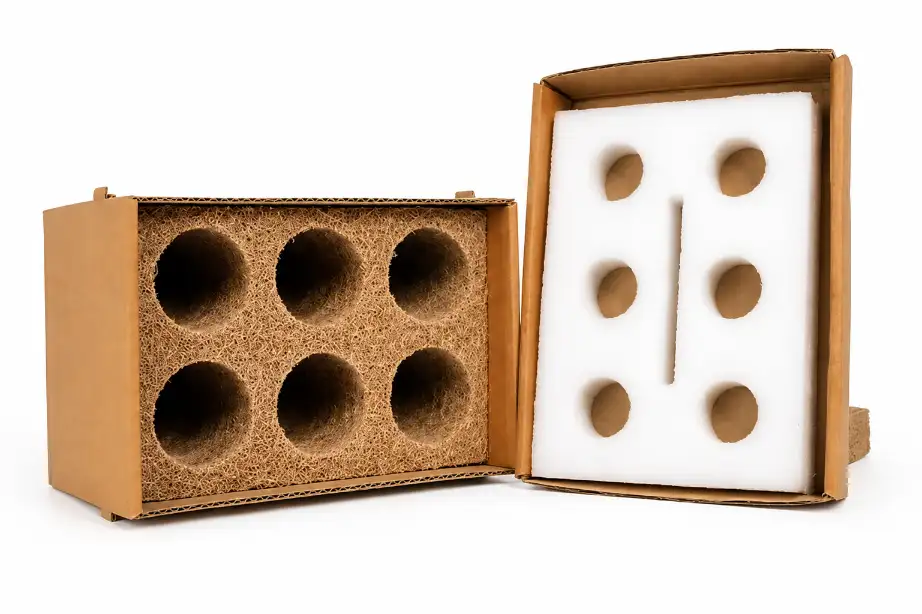
Coir fitted cushion is a moulded or pressed block of bonded coir fibre engineered to substitute polyurethane or EPS foam inserts, providing shaped, product-specific protective packaging for heavier or higher-value items.
Uses: electronics and appliance protective inserts, furniture corner and edge packaging, automotive parts packaging, cosmetics and premium retail packaging
Specification:
Distinctive properties
Compression-moulded to precise product shapes like conventional foam inserts
Compostable/biodegradable, avoiding foam landfill and marine litter issues
Good energy absorption on impact due to fibre resilience
Reusable and recyclable into other coir products at end of life
Material : Bonded/pressed coir fibre
Form/Type : Moulded to your exact product shape. Fits into your existing cartons with no box redesign needed.
Dimensions :Customisable per product
Density : Customisable per product
Key mechanical property : Compressive resilience: recovers >80% of original thickness after impact loading
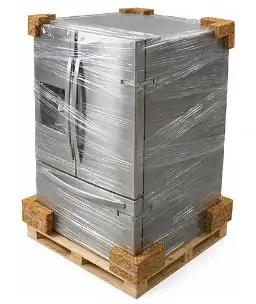
Coir Corner Protectors ( FV-PKG-004 )
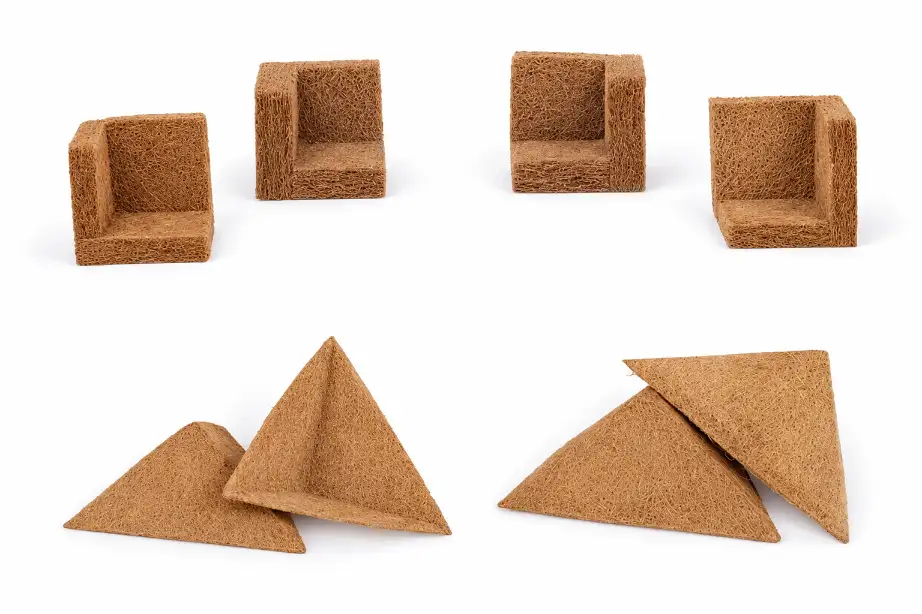
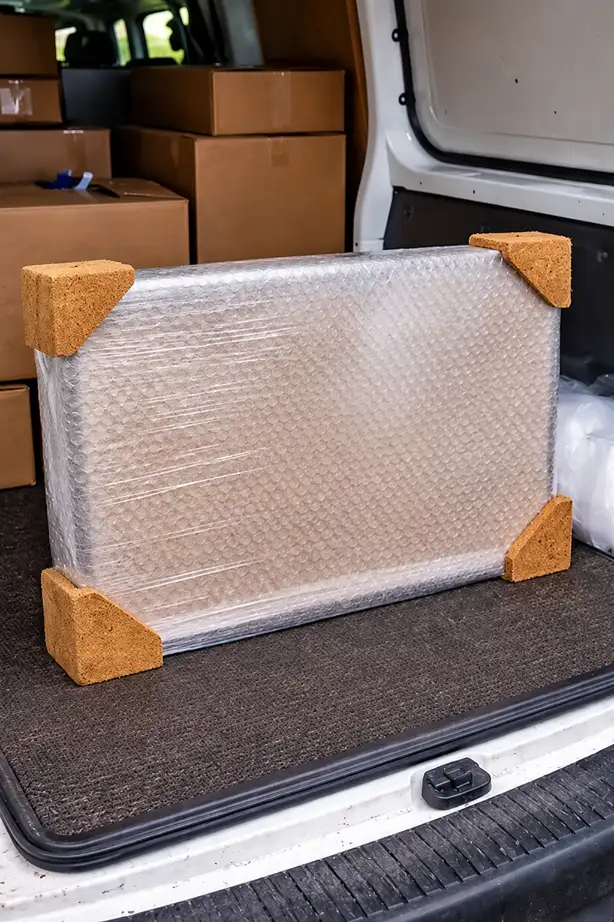
Coir corner protectors are moulded, angled coir fibre pieces fitted to the corners and edges of cartons, furniture and pallet loads to absorb impact and prevent crushing during stacking and transit.
Absorbs corner-impact loads that commonly damage cartons in transit
Rigid moulded shape maintains stacking strength on pallets
Compostable and recyclable, replacing plastic/EPS corner blocks
Lightweight, adding minimal shipping weight
Custom angle and length options for different product profiles
Material : Moulded compressed coir fibre
Form/Type : Custom shaped corner/edge protector
Dimensions : 100% customisable - dimensions, cavity layout and shape
Density : Customisable to cushioning requirements
Key mechanical property : Stacking/compressive load rating comparable to standard EPS corner blocks
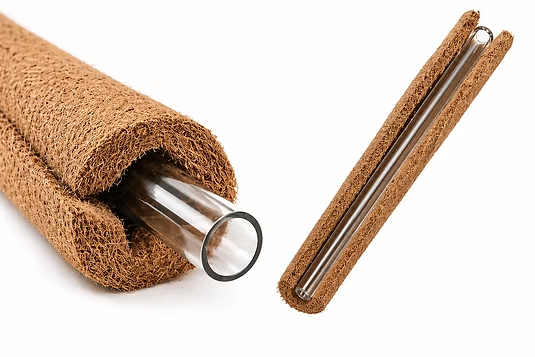
Coir Tube Protectors ( FV-PKG-005 )
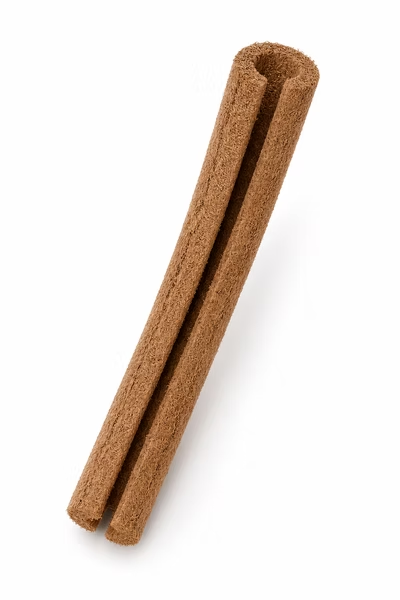
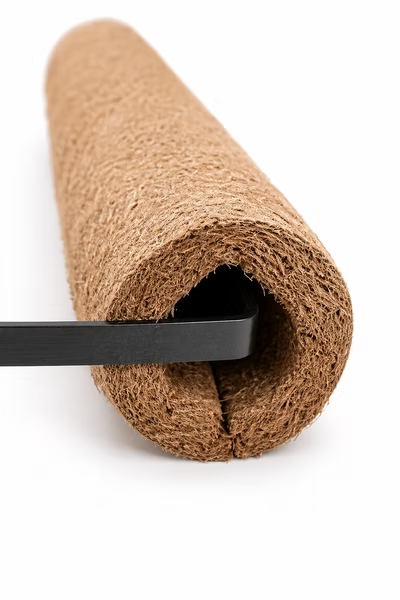
Coir tube protectors are rolled or wound coir fibre sleeves used to protect long, cylindrical or rolled goods such as tubing, rolled textiles, posters and metal bar stock during storage and transport.
Uses: rolled textile and carpet protection, pipe and tube stock packaging, poster/print roll protection, metal bar and rod bundling
Specification:
Distinctive properties
Wraps and cushions cylindrical goods along their full length
Compostable alternative to plastic-wrapped foam tube protectors
Resists crushing under bundled/stacked storage conditions
Lightweight and easy to fit and remove on the production line
Available in a range of internal diameters to suit product size
Material : Wound/felted coir fibre sleeve (vulcanised rubber bonded)
Form/Type : Tubular sleeve /Split-tube / hinged - wraps around cylindrical items and clamps shut
Dimensions : Customisable
Density : Wall density customisable to protection requirement
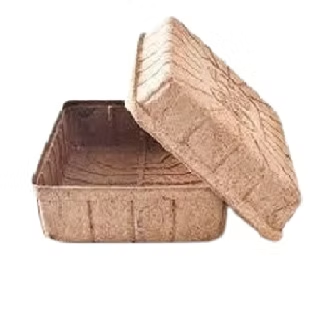
Coir packaging containers are moulded boxes, trays and crates pressed from bonded coir fibre, used as a rigid, compostable alternative to cardboard or plastic containers for produce, retail goods and industrial parts.
Uses: fresh produce trays and crates, retail gift and cosmetics packaging, corporate gifting, artisan & handmade good
Specification:
Distinctive properties
Rigid, stackable structure suitable for repeated handling
Fully compostable and recyclable into further coir products
Naturally moisture-tolerant, suited to fresh produce applications
Reduces reliance on single-use plastic crates and trays
Can be moulded with branding/embossing for retail presentation
Lifespan/Degradation period : Reusable 5–10 times; compostable within 6–12 months
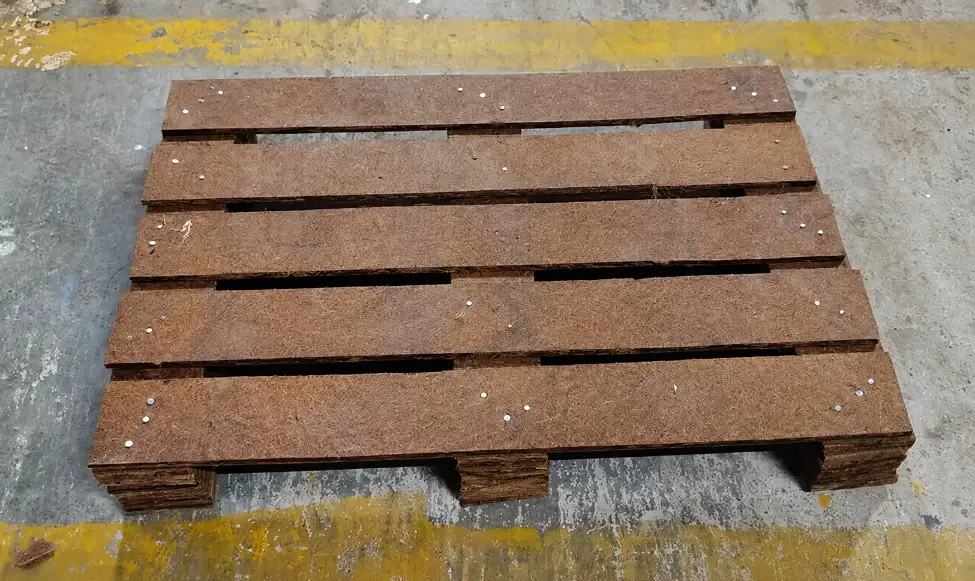
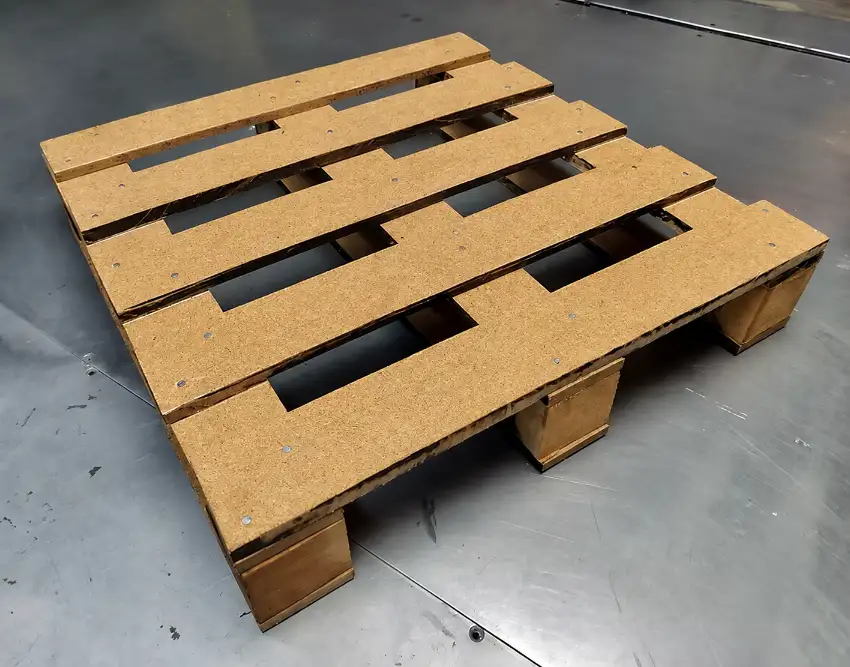
Coir Pallets ( FV-PKG-007 )
Coir pallets are moulded or pressed composite pallets combining dense bonded coir fibre with a natural resin binder to create a lightweight, load-bearing pallet suited to one-way or limited-reuse export shipments, avoiding the weight and fumigation treatment requirements of timber pallets.
Lighter than timber pallets, reducing freight weight costs
No fumigation/heat-treatment requirement associated with wood pallets (ISPM-15) for many export routes
Compostable/recyclable at end of life, unlike plastic pallets
Consistent moulded dimensions for reliable racking and stacking
Resistant to fungal decay better than untreated softwood pallets
Material : Bonded compressed coir fibre with natural resin binder
Form/Type : Moulded flat pallet
Dimensions : Customisable
Density : Customisable
Key mechanical property : Static load capacity as per product specification
Lifespan/Degradation period : Reusable multiple trips; fully compostable at end of life
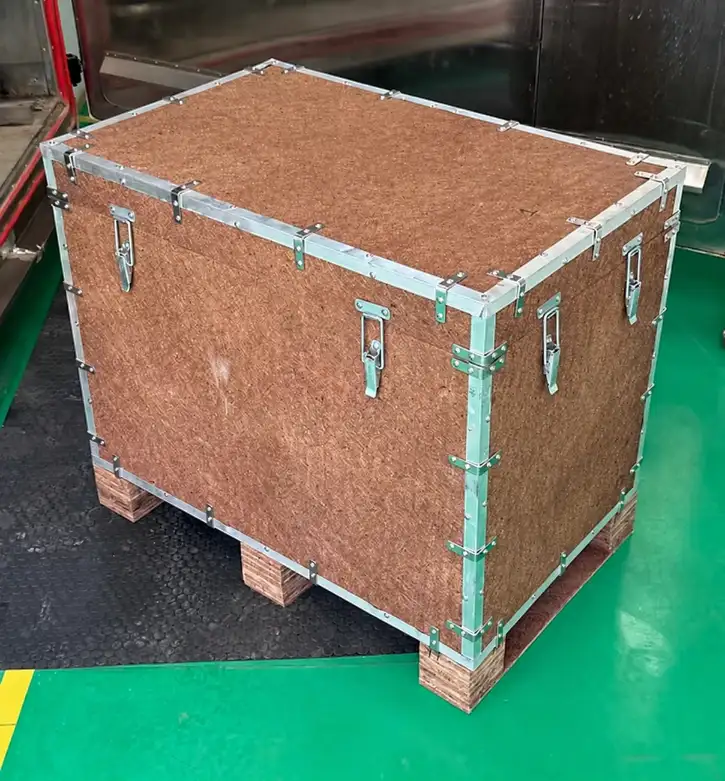
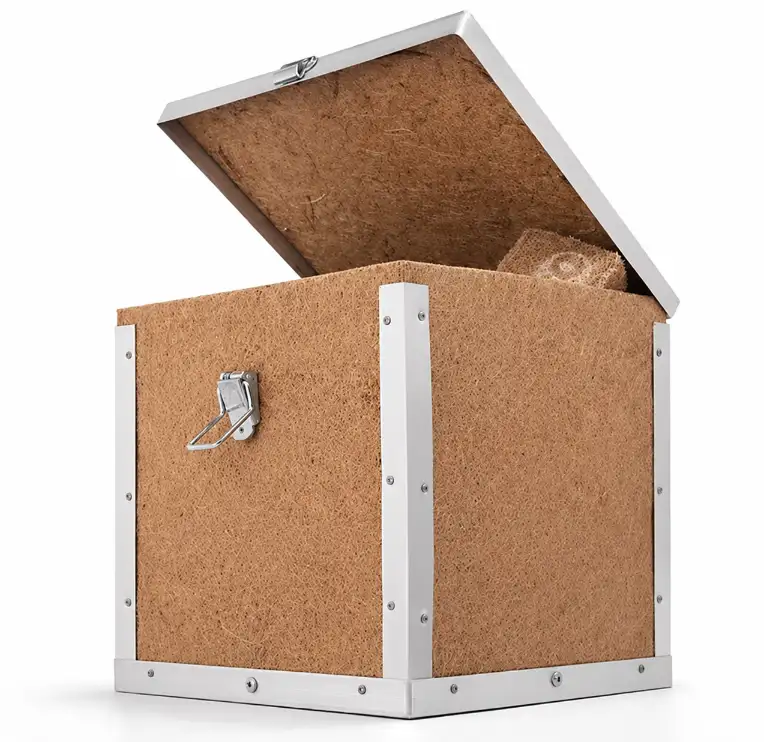
Coir Wood Box ( FV-PKG-008 )
Coir wood boxes are rigid shipping crates and boxes fabricated from coir-wood board — a plywood-substitute panel made from compressed coir fibre. Panels are cut, jointed and assembled into crates with metal reinforced edges and latches giving exporters a rigid, load-bearing box without using virgin timber.
Uses: machinery and heavy equipment export crates, general industrial and export shipping boxes, Electronics & appliances boxing, Art & antiques creates, Warehouse crates
Specification:
Distinctive properties
Rigid, wood-like panel strength suitable for load-bearing crates and boxes
Made from coconut husk residue, reducing pressure on virgin timber and plywood
Exempt from ISPM-15 fumigation/heat-treatment requirements applied to solid wood packaging
Naturally resistant to fungal decay and termite attack compared with untreated softwood
Material : Compressed coir fibre with resin binder (coir-wood board)
Form/Type : Collapsible / knock-down design for flat storage
Dimensions : Customisable
Lifespan/Degradation period : Reusable multiple trips as a rigid crate; compostable/recyclable at end of life
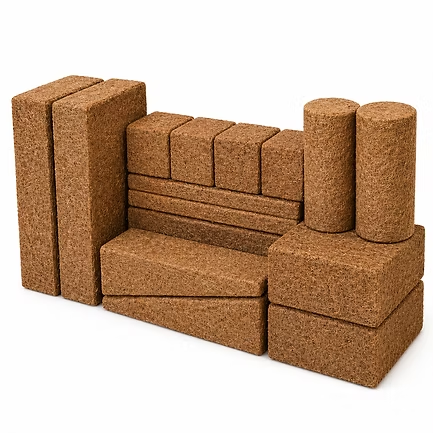
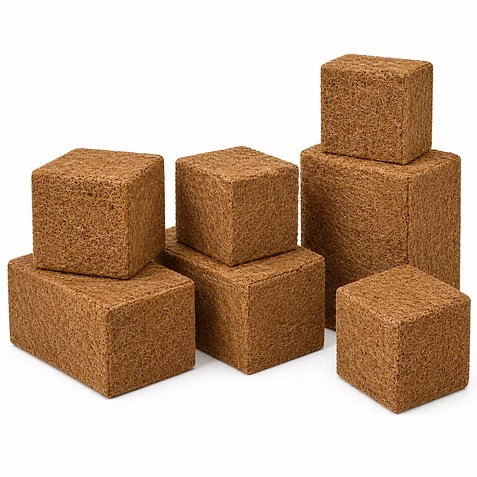
Coir Foam Block ( FV-PKG-009 )
Coir foam blocks are resilient, springy pre-cut coir fibre blocks. The coir foam block behaves more like a conventional flexible foam, compressing under load and recovering its shape, making it suited to cushioning and shock-absorbing packaging applications.
Uses: flexible cushioning inserts for electrical goods, Glassware, diagnostic equipment, industrial parts
Specification:
Distinctive properties
Open, springy cellular structure gives elastic cushioning similar to conventional rubberised foam
Good vibration damping and shock absorption for transit protection
Breathable, open-cell structure resists moisture retention and mould compared with closed-cell plastic foams
Standard block shapes that slot into cartons for immediate use
Lifespan/Degradation period : Reusable cushioning life comparable to conventional foam packaging; biodegradable at end of life
Coir Table Protectors ( FV-PKG-010 )
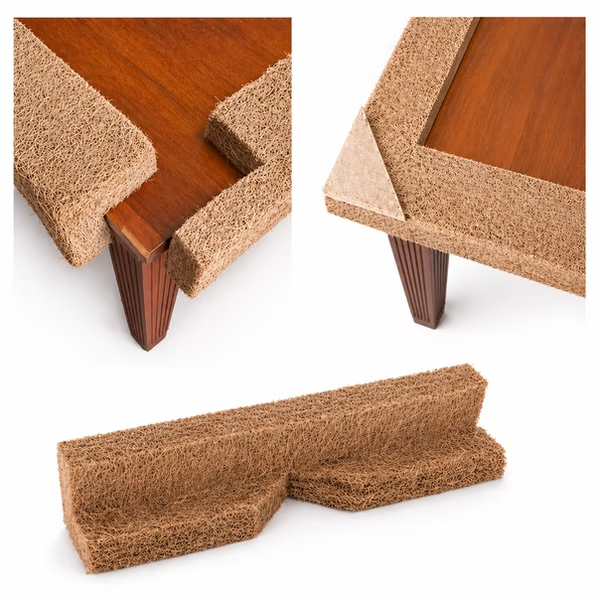
Coir table protectors are flat felted or needle-punched coir sheets and edge-wrap rolls used to cover and cushion table tops, glass tops and polished furniture surfaces during transport, storage and stacking, preventing scratches, impact marks and moisture damage to the protected surface.
Uses: furniture and table-top surface protection during transit and storage, furniture showroom and warehouse stacking protection, removals and export furniture packaging
Specification:
Distinctive properties
Soft, even felted surface cushions and protects surfaces from scratches
Semi-rigid coir felt structure resists compression and tearing under stacked loads
Naturally moisture-wicking, reducing risk of condensation marking on protected surfaces
Compostable/recyclable alternative to foam sheet or bubble wrap surface protection
Cut-to-size sheets or rolled edge-wrap suit both flat covering and edge/corner wrapping
Material : Coir fibre (vulcanised rubber bonded)
Form/Type : Leg caps, edge wraps, surface pads
Dimensions : Customisable
Density : Customisable
Lifespan/Degradation period : Reusable across multiple moves/shipments; compostable within 6-12 months
Coir Air Filters ( FV-FIL-001 )
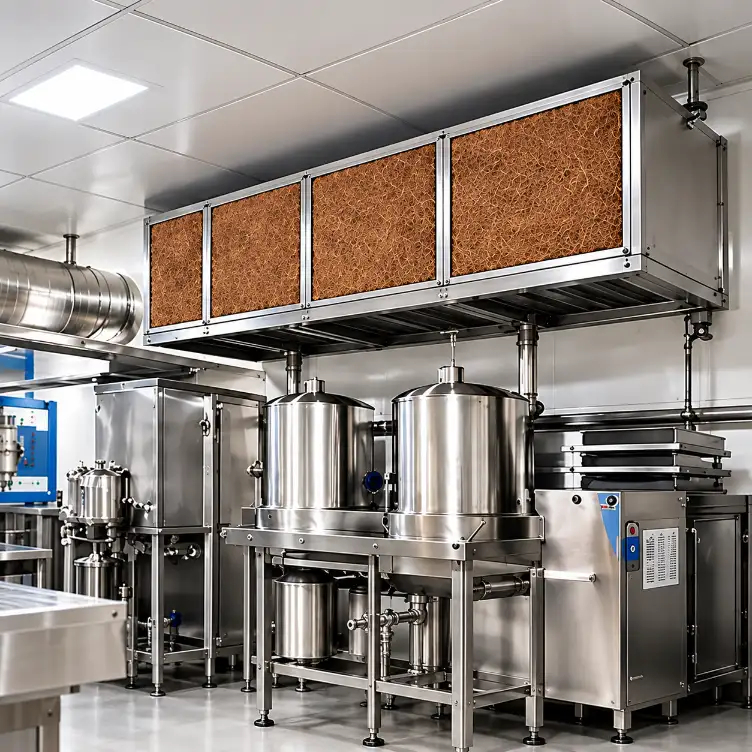
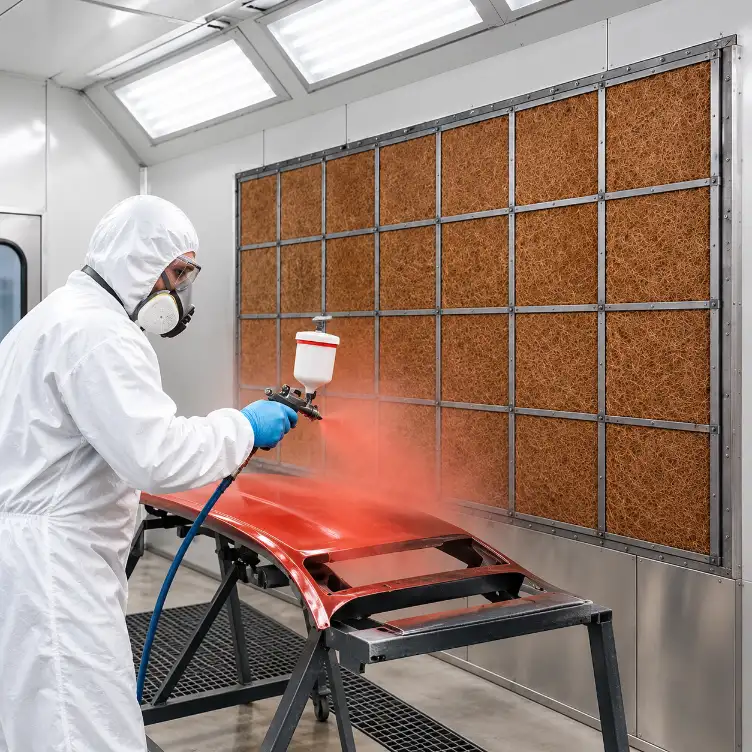
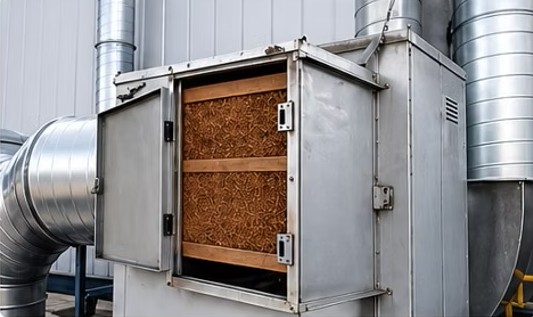
Coir air filters use loosely packed or felted coir fibre as a filtration media within ventilation, dust extraction or biofilter housings, exploiting the fibre's high surface area and natural fibrous structure to capture particulates and support biofiltration of odorous compounds.
Uses: industrial dust and particulate extraction, HVAC pre-filtration, odour-control biofilters at waste and wastewater facilities, agricultural ventilation filtration
Specification:
Distinctive properties
High surface area per unit volume for effective particulate capture
Unlike synthetic polyester and PP media that melt under heat, coir fibre chars without producing flaming droplets or toxic fumes
Renewable, compostable filter media compared with synthetic (polyester/glass fibre) filter media
Good airflow permeability, limiting pressure drop across the filter bed
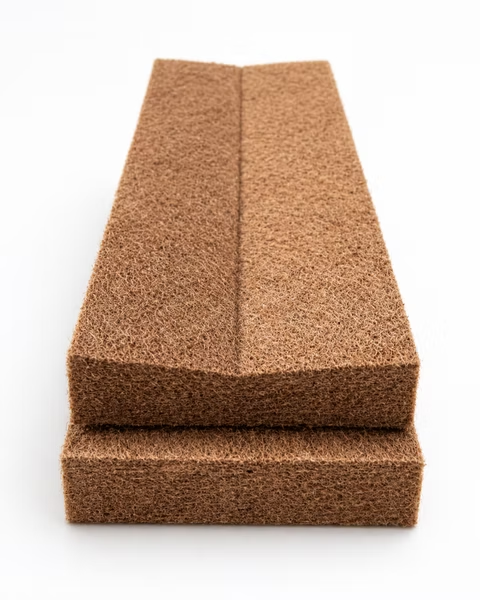
Roll and pad formats in lower GSM ranges (700–1,200 gsm) can be rinsed with water and reused 2–3 times before replacement.
Dimensions : Standard pad sizes 500 x 500 mm , custom lengths available
Density/GSM : 700-2200 gsm
Thickness : 5mm-100mm
Lifespan/Degradation period : Filter media service life 6–12 months (application dependent) before replacement/composting
Coir Water Filter Media ( FV-FIL-002 )
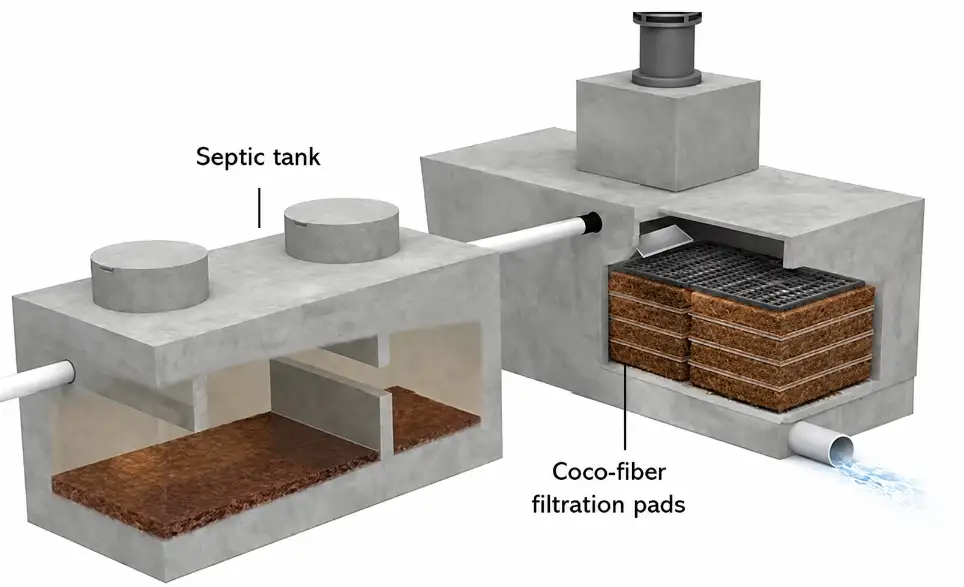
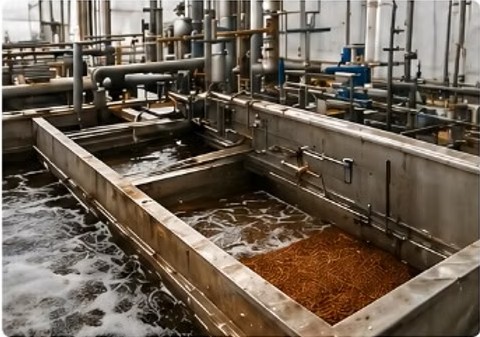
Coir water filter media is precision engineered coir fibre used as a low-cost, renewable biofiltration and adsorption media within wastewater treatment systems, capable of physically trapping suspended solids and adsorbing certain pollutants and heavy metals from water passing through the media bed.
Uses: domestic and small-scale wastewater treatment, stormwater and greywater filtration, aquaculture and pond water filtration, industrial pre-treatment adsorption media
Specification:
Distinctive properties
High surface area supports both mechanical filtration and biofilm-based biological treatment
Void structure maintains consistent flow under hydraulic load, with slower headloss rise than PP/PEmedia.
Renewable, low-cost alternative to synthetic or mineral filter media
Supports beneficial microbial colonisation for BOD/COD reduction in biofilter systems
Compostable spent media, simplifying disposal versus synthetic filter cartridges
Material : Natural coir fibre
Form/Type : High-density pads, retrofit rolls, cartridge inserts, packed media modules, random pack media (trickling filters)
Dimensions : Customisable
Density/GSM : Customisable
Micron efficiency : 94% capture at 60 microns
Lifespan/Degradation period : Media bed service life 6–18 months before replacement (loading dependent)
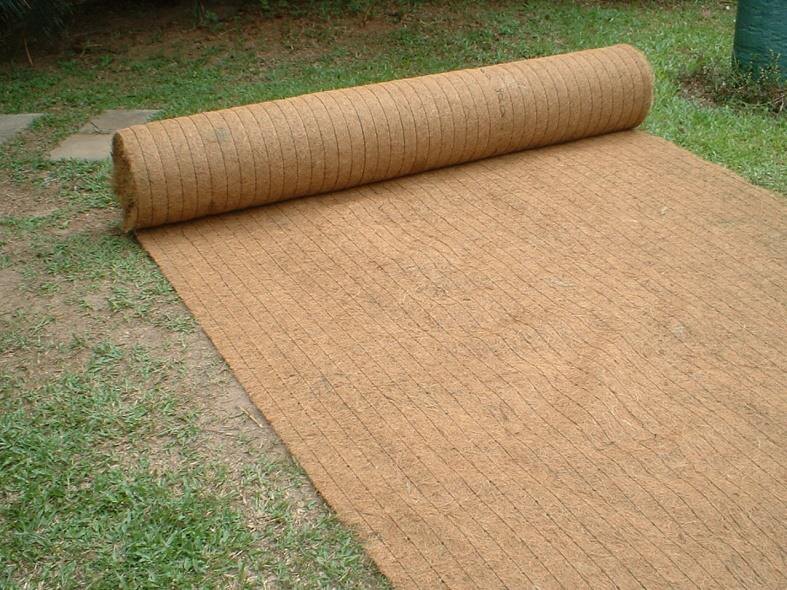
Coir Geotextiles ( FV-ECO-001 )
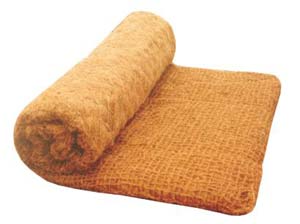
Coir geotextiles are woven or knitted mats made from twisted coir (coconut husk) yarn, engineered as a fully biodegradable alternative to synthetic geotextiles. The open, hand or machine-woven mesh structure allows vegetation to establish through the matting while the coir fibre itself resists tension and abrasion during the critical early establishment period of a slope or bank.
Uses: riverbank and canal bank protection, slope and embankment stabilisation, coastal and dune reinforcement, road and rail formation separation, wetland restoration, mining site rehabilitation
Specification:
Distinctive properties
100% natural, biodegradable and compostable fibre - leaves no synthetic residue in the soil
High initial tensile strength that gradually transfers load to establishing root systems
Open weave promotes rapid vegetation growth and light penetration
Excellent moisture retention that supports seed germination
Resistant to UV degradation during its functional lifespan, unlike many synthetics in exposed use
Naturally rot - and mildew - resistant due to high lignin content
Material : 100% natural coir (coconut husk) yarn, twisted and wove
Form/Type : Woven mesh geotextile, supplied in rolls
Dimensions : Roll widths 1.5m, 2 m or 2.5 m; standard roll length 20 m or 50 m (customisable)
Density/GSM : 400–900 gsm depending on grade (customisable)
Lifespan / Degradation period : Functional life approx. 24–36 months, fully biodegrading within 3–5 years
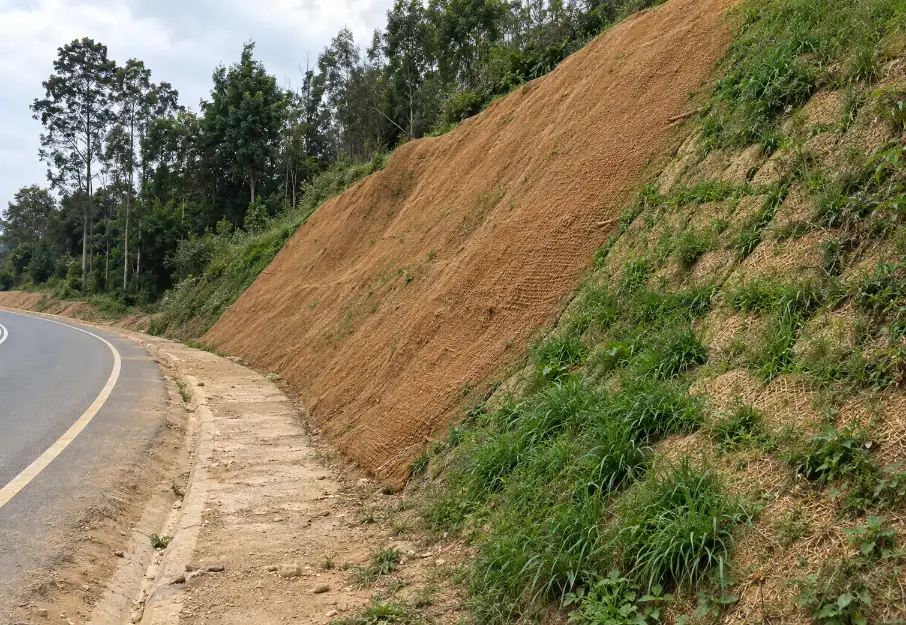
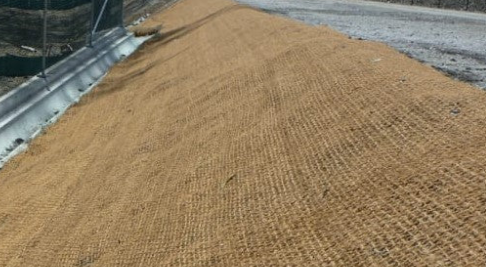
Coir Erosion Control Blankets ( FV-ECO-002 )
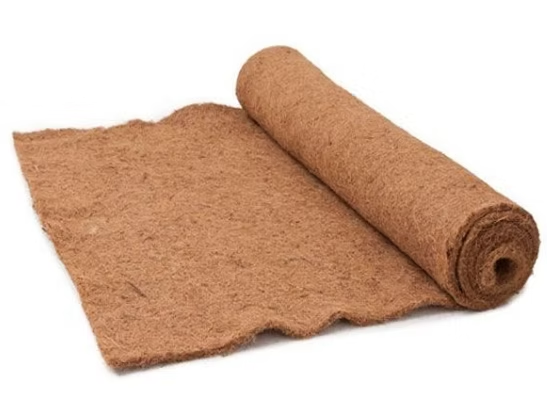
Coir erosion control blankets are lighter - weight, needle - punched or stitched mats of loose coir fibre sandwiched between light coir or biodegradable netting (Polypropylene netting also available). They are designed to be laid directly over seeded topsoil to protect it from rainfall impact and surface runoff while vegetation establishes.
Uses: To soil protection on graded slopes, stream and channel banks, roadside cuttings, landfill capping, general landscape erosion control
Specification:
Distinctive properties
Lightweight and flexible for easy hand installation on steep or irregular slopes
Even fibre distribution provides uniform surface coverage and shading
Reduces rainfall splash erosion and surface runoff velocity
Fully biodegradable, adding organic matter to soil as it breaks down
Improves soil moisture retention and micro - climate for seed germination
Material : Material Loose/carded coir fibre matrix with light coir or jute net facing
Form/Type : Rolled blanket
Dimensions : 2 m x 25 m or 2 m x 50 m rolls (customisable)
Density/GSM : 400–900 gsm depending on grade (customisable)
Lifespan / Degradation period : Functional life 2 – 5 years; fully degrades after 5 years
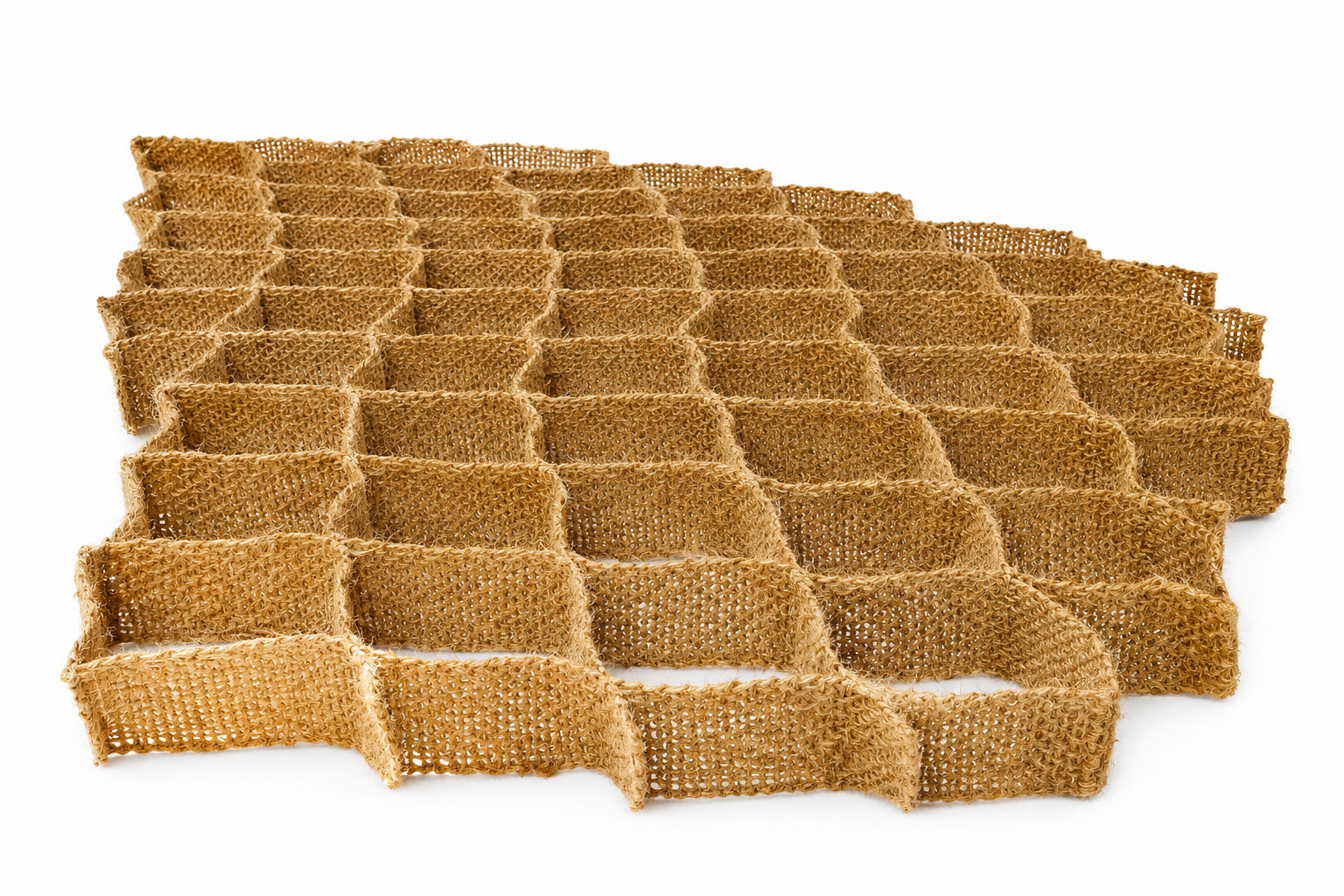
Coir Geocells ( FV-ECO-003 )
Coir geocells are three-dimensional honeycomb-like cellular confinement structures woven from coir rope or heavy coir webbing. Once pegged out and infilled with topsoil, gravel or seed mix, the cell walls confine the fill material, preventing lateral movement on steep slopes while allowing full vegetation growth through the open cell structure.
Uses : Steep slope stabilisation, channel and spillway lining, load support on soft ground, retaining structures, green wall/terrace construction
Specification:
Distinctive properties
Confines infill material to resist slippage on slopes steeper than 1:1
100% biodegradable cell walls that transfer confinement duty to established roots
High compressive and shear resistance when infilled
Expands accordion - style on site for rapid installation
Reduces need for concrete or synthetic geogrid confinement systems
Material : Heavy woven/twisted coir rope, cell walls stitched or woven
Form/Type : Expandable 3D honeycomb panel
Dimensions : Cell depth 75–150 mm; cell size approx. 200 x 200 mm; expanded panel approx. 3 m x 6 m
Key mechanical property : Compressive/confinement strength: withstands infilled loading on slopes up to 1:0.5
Lifespan / Degradation period : Functional life 24–36 months, biodegrades within 4–5 years
Coir Logs ( FV-ECO-004 )
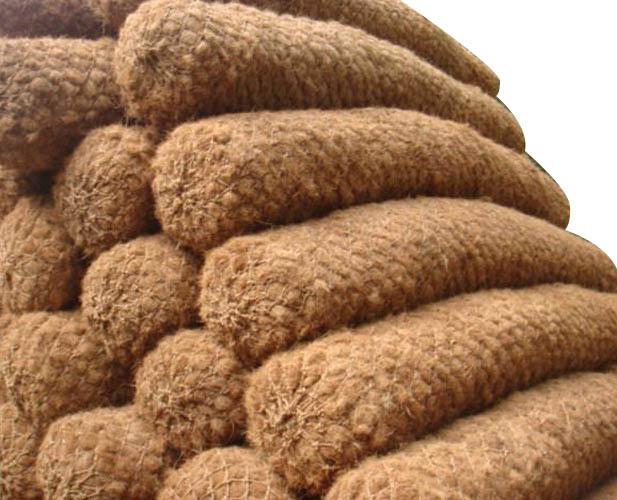
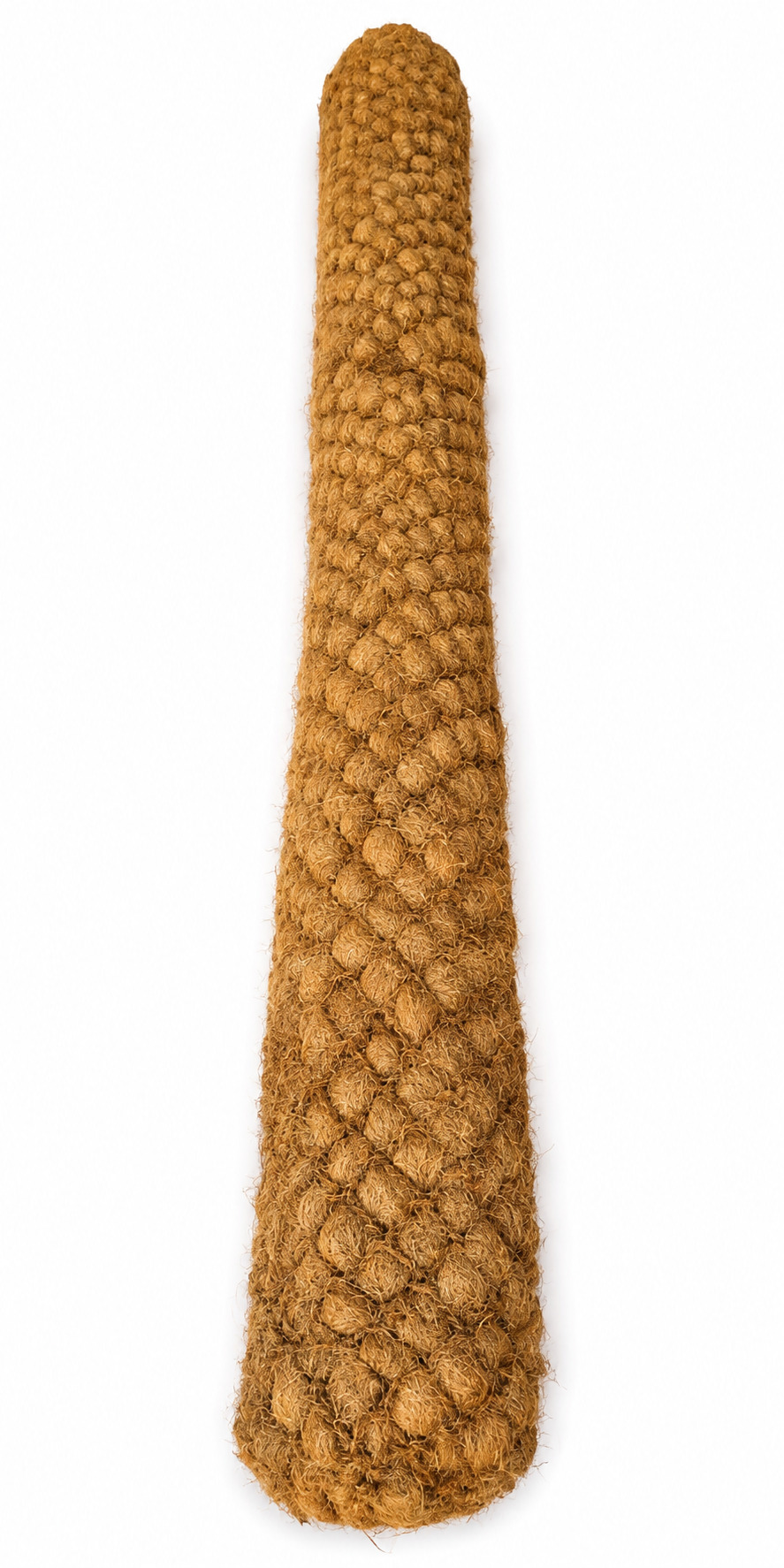
Coir logs (also called coir rolls or wattles) are cylindrical bundles of dense, resilient coir fibre bound tightly within a durable coir net casing. They act as a soft, flexible toe protection or check dam, absorbing wave and current energy while providing a growing medium for bank - edge vegetation.
Uses : Streambank and riverbank toe protection, shoreline and wave-energy dissipation, check dams in drainage channels, bio-retention edging, sediment and silt control
Specification:
Distinctive properties
High-density fibre core resists compression and maintains shape underwater
Coir net casing (typically 2x2 or 4x4 mesh) contains fibre while remaining biodegradable
Buoyant yet stable - used as floating or staked bank protection
Dissipates wave and current energy, reducing toe scour
Available pre - vegetated on request
Material : Dense coir fibre core in woven coir netting
Form/Type : Cylindrical log/wattle
Dimensions : Diameter 300/400/500 mm; standard lengths 3 -6 m
Density/GSM : Fibre density approx. 90–130 kg/m3 within the log
Key mechanical property : Compressive resilience: retains >85% of original diameter after sustained loading
Lifespan / Degradation period : Functional life 2–5 years depending on exposure
Pre-seeded Coir Systems ( FV-ECO-005 )
Pre-seeded coir systems combine a coir erosion control blanket or mat with a site - specific seed mix (grasses, wildflowers or native species) fixed within the fibre matrix during manufacture. This eliminates a separate seeding step on site and ensures even seed distribution and protection from birds and rainfall wash - off.
Uses : Rapid revegetation of slopes and embankments, restoration projects with specified native seed mixes, road and rail corridor greening, post-construction landscaping
Specification:
Distinctive properties
Seed is factory - fixed within the fibre matrix for even distribution and protection
Faster, more reliable germination than post - lay broadcast seeding
Custom seed mixes available for regional or native species requirements
Combines erosion protection and revegetation in a single installation step
Fully biodegradable carrier matrix
Material : Coir fibre blanket/mat with embedded seed mix
Key mechanical property : Germination establishment typically within 2–4 weeks under suitable conditions
Lifespan / Degradation period : Functional life 12–24 months (matrix); seed mix specified per project
Needle Felt Rolls ( FV-ECO-006 )
Needle felt rolls are dense, mechanically needle - punched coir fibre matting in which fibres are interlocked (rather than woven) to create a robust, non - fraying felt. The needle - punching process gives higher density and dimensional stability than loose blankets, suited to higher - energy erosion sites.
Uses : High - flow drainage channel lining, spillways, steep cut - slope protection, combined with geocells or logs for composite bioengineering systems
Specification:
Distinctive properties
Needle-punched construction resists unravelling and fraying at cut edges
Higher density than standard blankets for higher - energy water flow sites
Consistent thickness and coverage across the roll
Fully biodegradable with a longer functional life than loose - fibre blankets
Can be combined with vegetation for composite armouring
Material : Needle - punched coir fibre felt
Form/Type : Rolled felt
Dimensions : Roll width 1–2 m; roll length 25–50 m; thickness 5-20 mm
Lifespan / Degradation period : Functional life 3–5 years
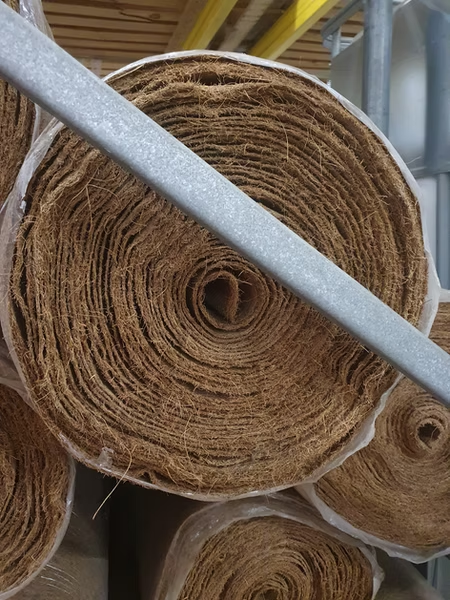
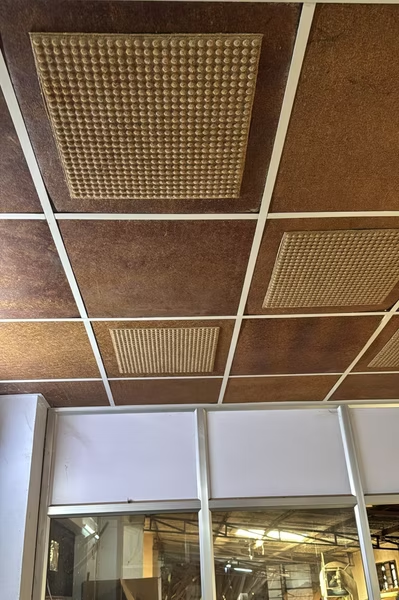
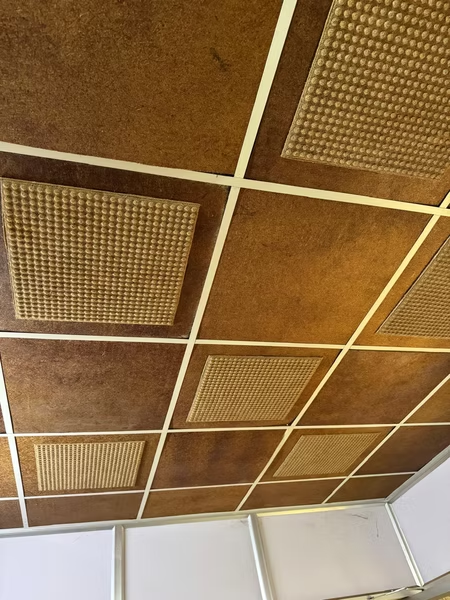
Coir Roof Panels ( FV-GRI-001 )
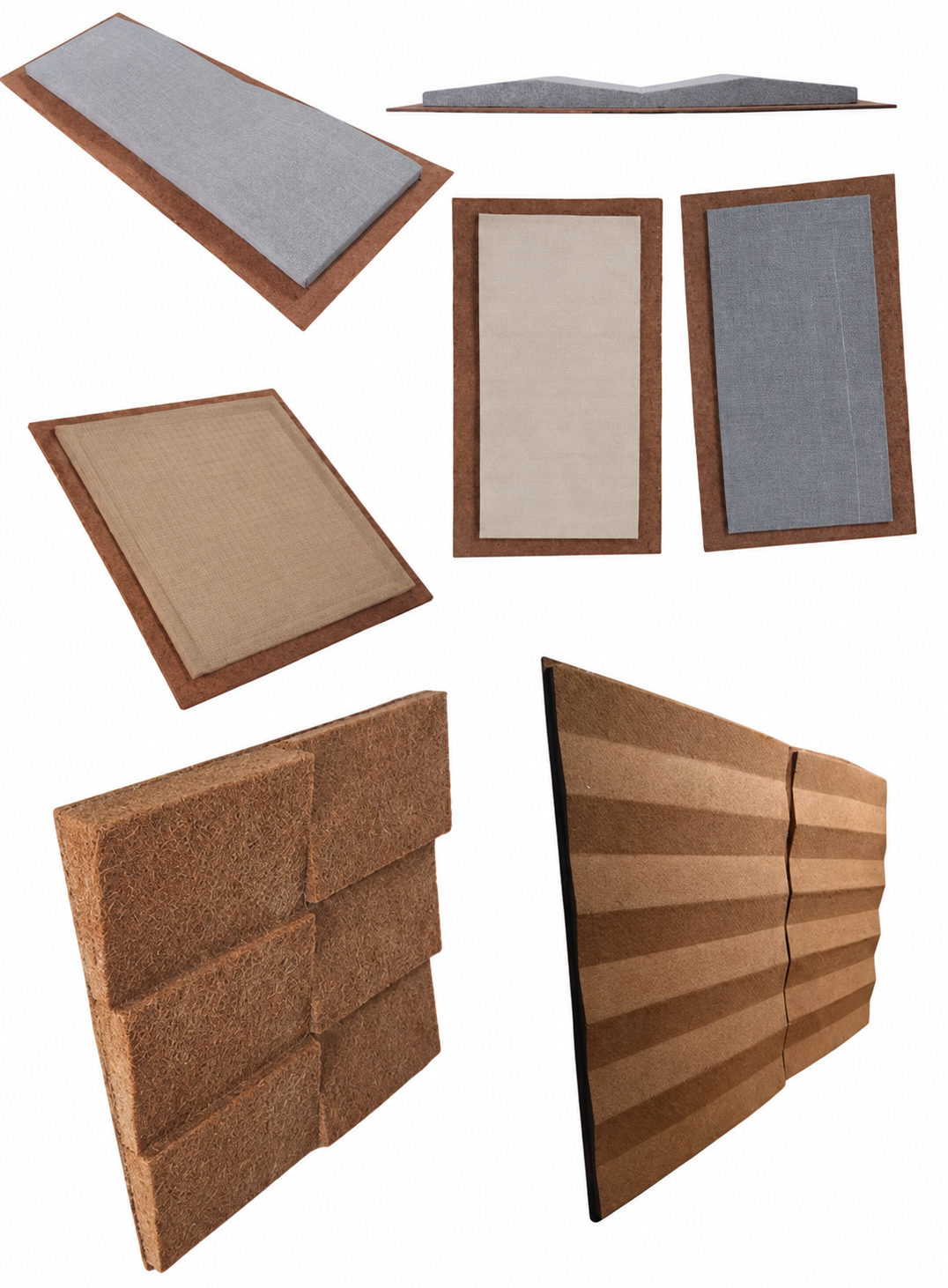
Coir roof panels are made of compressed coir fibre bound with natural latex and are used as a breathable alternative to PVC, gypsum, and mineral fibre ceiling tiles- with built-in acoustic and thermal insulation properties.
Uses: Hospitality and retail centres, Residential buildings, Event spaces, Work places & Green buildings
Specification:
Distinctive properties
Renewable, rapidly-replenished fibre source compared with conventional boards
Good thermal insulation which keeps interior spaces cooler in summer and warmer in winter, reducing HVAC load.
Natural warm texture suited to biophilic interior design
Dense fibre structure absorbs sound, reducing echo and noise in interior spaces.
Unlike PVC, coir panels allow moisture vapour to pass through, preventing condensation and mould.
Material : Compressed/ rubberised coir fibre
Form/Type : Rigid flat panel
Dimensions : Customisable
Density : Customisable
Lifespan/Degradation period : Service life 15–25 years indoors; compostable/recyclable at end of life if untreated
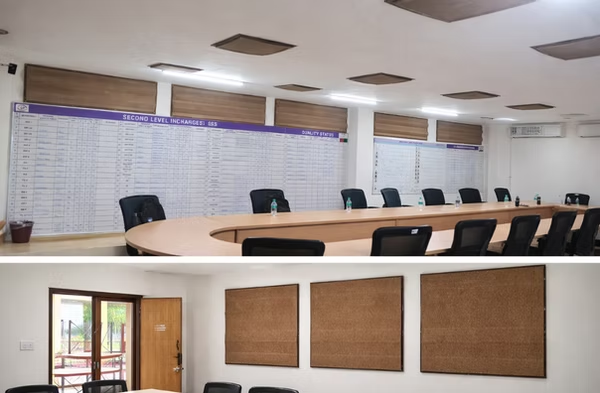
Coir Acoustic Panels ( FV-GRI-002 )
Coir acoustic panels are made of compressed coir fibre that absorb airborne sound within a room, offering a natural-fibre alternative to mineral wool or foam acoustic panels with comparable absorption performance.
Uses: office and meeting room acoustic treatment, hotel and restaurant sound dampening, auditoriums and cinemas, recording studios and home theatres
Specification:
Distinctive properties
Open, porous fibre structure provides effective mid-to-high frequency sound absorption
Renewable natural fibre alternative to mineral wool or synthetic foam cores
Warm, textured finish provides natural aesthetics
Naturally fire-retardant relative to untreated foam panels
Contributes to green building certifications
Material : Compressed / rubberised coir fibre
Form/Type : Rigid or semi-rigid wall/ceiling panel
Dimensions : Customisable
Density : Customisable
Lifespan/Degradation period : Dense, fibrous structure traps sound energy across a wide frequency range. Sound absorption coefficient (NRC) varies with thickness.
Coir Thermal Insulation Boards ( FV-GRI-003 )
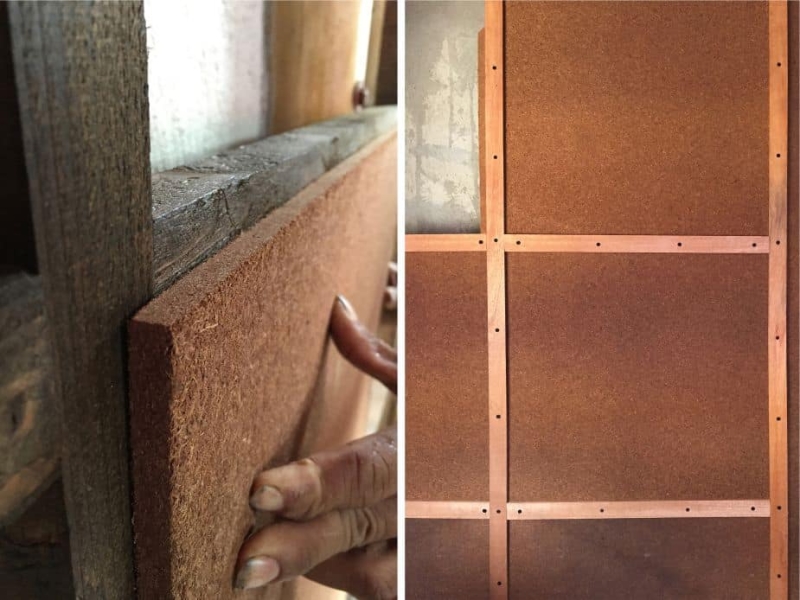
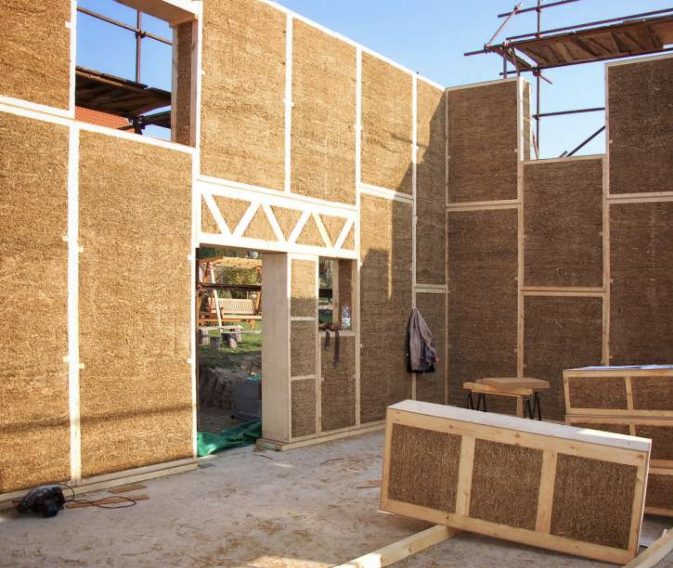
Insulation boards are rigid or semi-rigid panels of bonded coir fibre engineered for thermal insulation of building envelopes, offering a bio-based, low-embodied-carbon alternative to mineral wool, EPS or PIR insulation boards.
Uses: wall and roof cavity insulation, thermal retrofit of existing buildings, cold-storage and modular building insulation
Specification:
Distinctive properties
Low thermal conductivity comparable to conventional mineral wool insulation
Renewable, bio-based material with low embodied carbon versus petrochemical foams
Chemical resistance : No dimensional change after 24hrs immersion
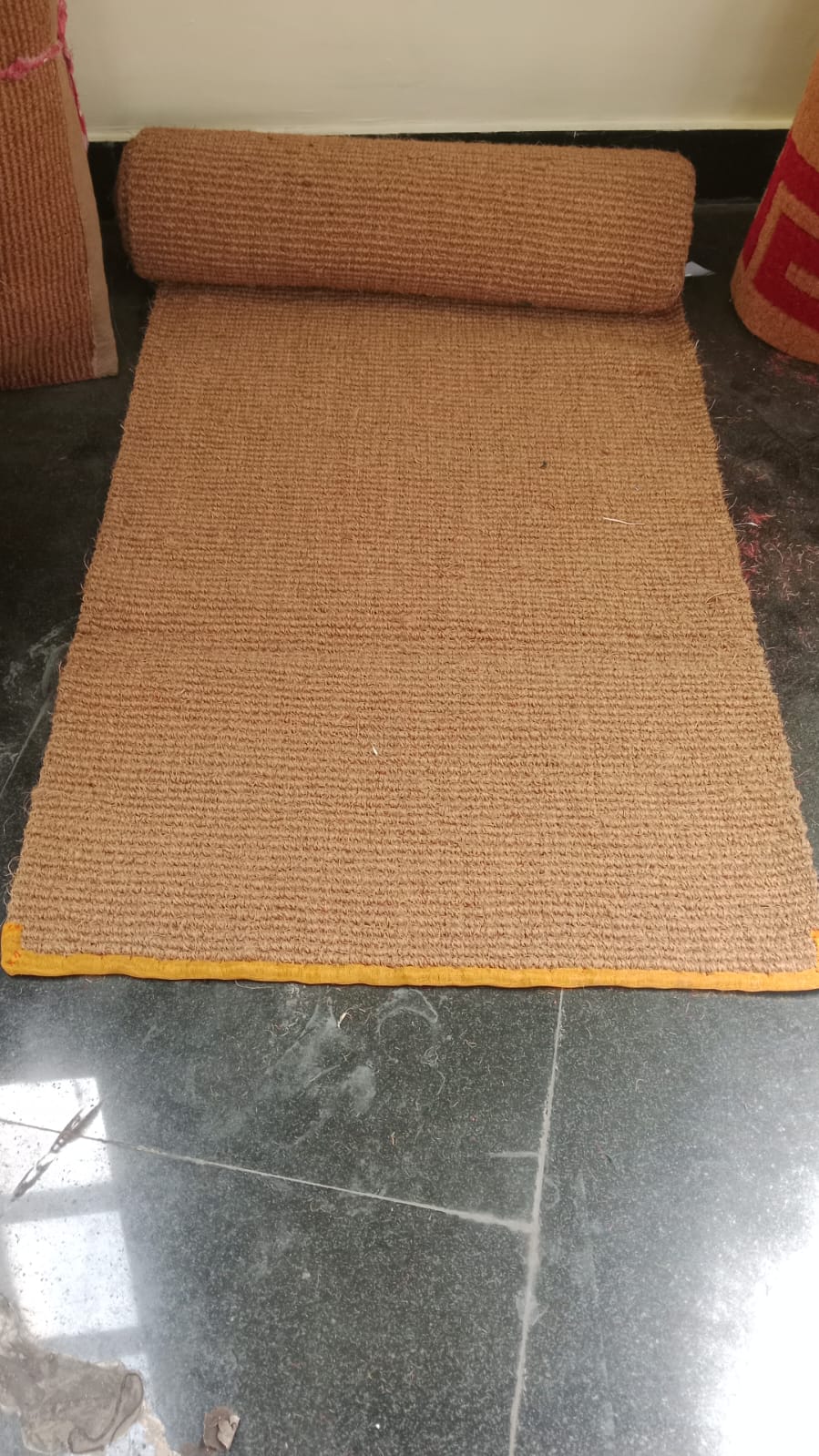
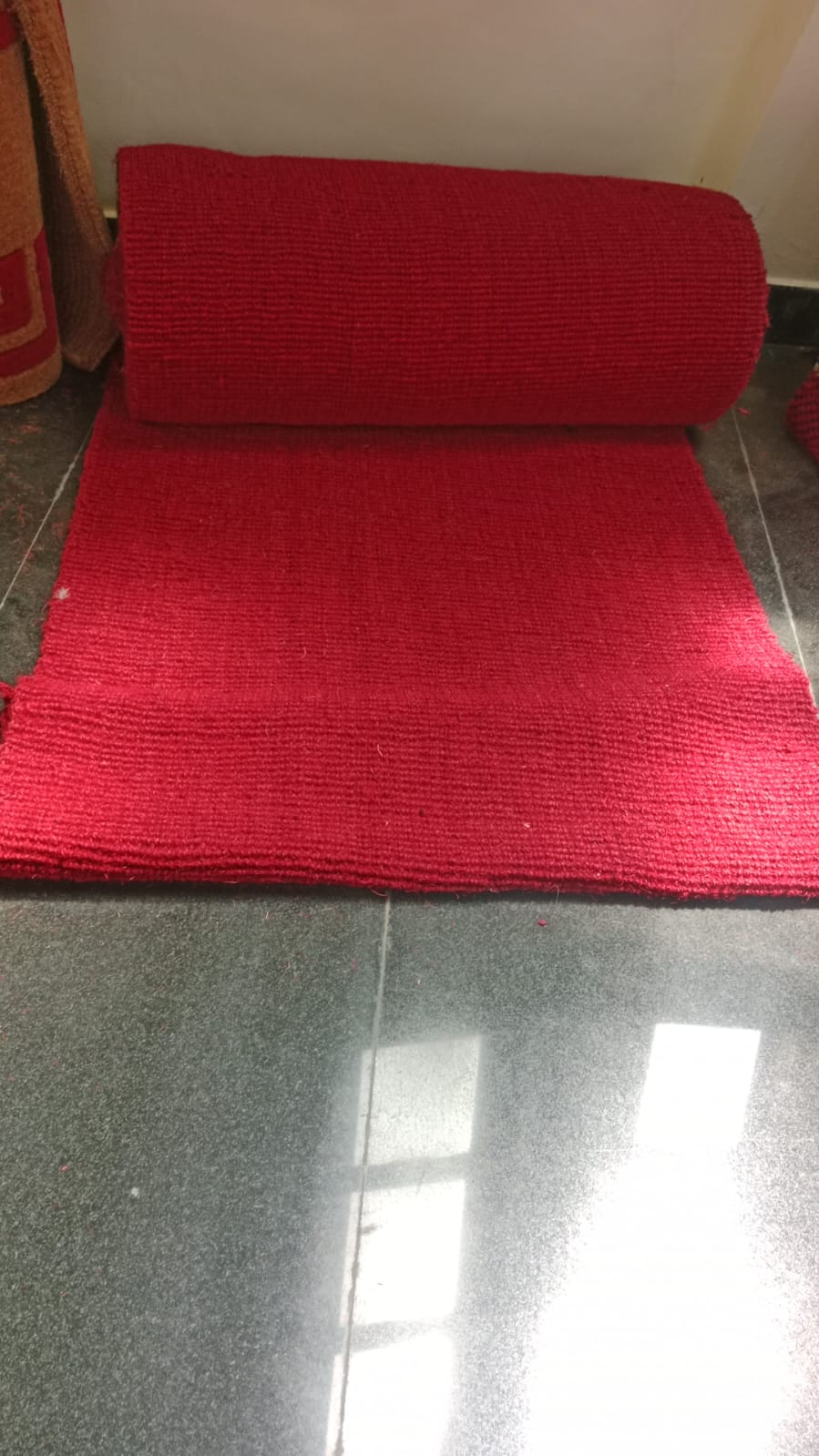
Coir Pathways ( FV-GRI-004 )
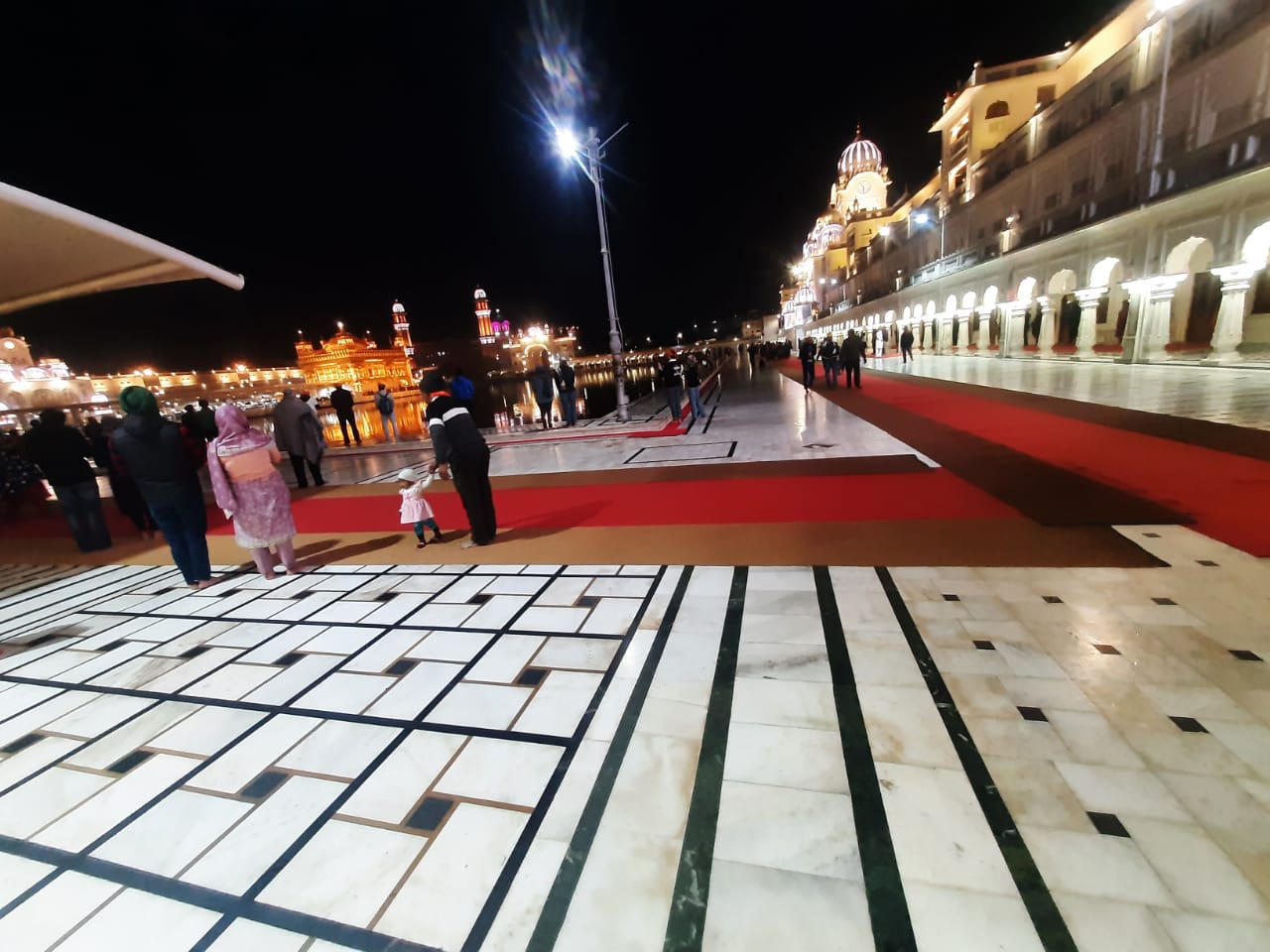
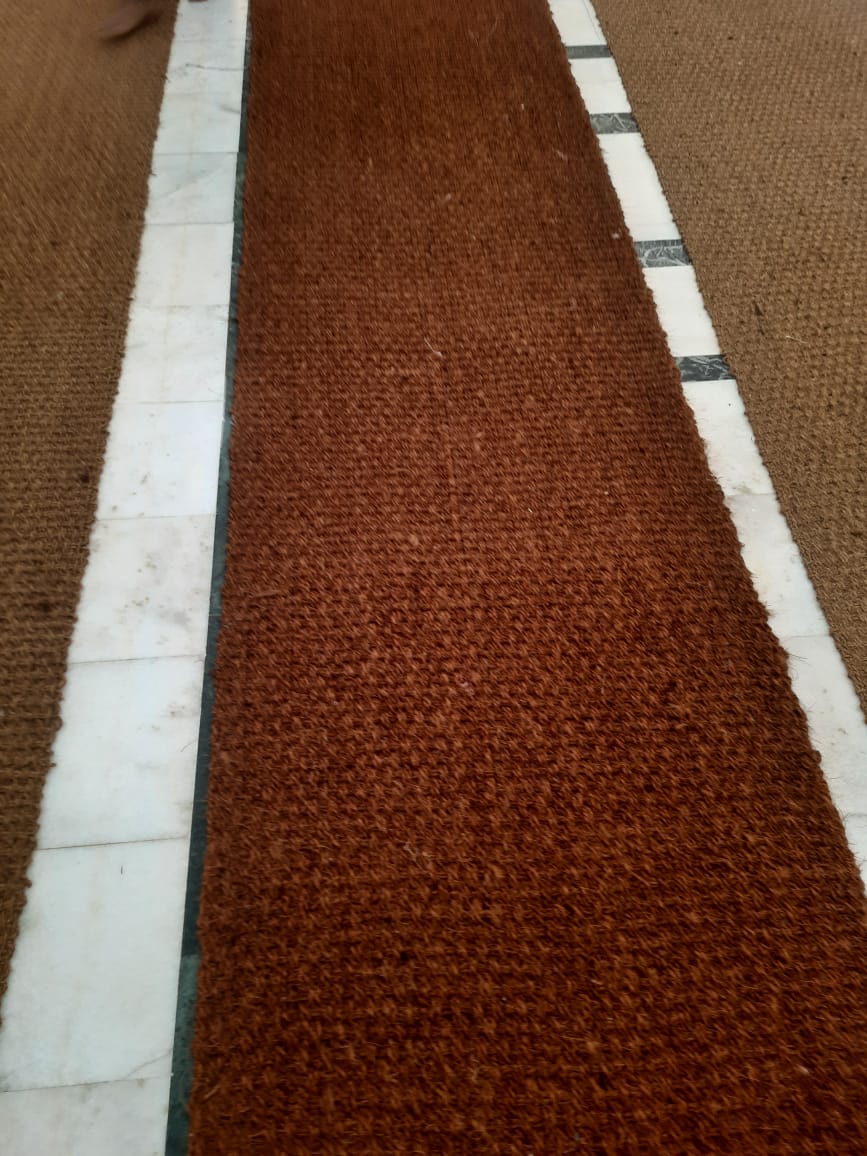
Coir pathways are compacted coir fibre and matting systems used to form soft, permeable walking and cycling paths through parks, gardens, wetlands and nature reserves, offering a natural surface alternative to tarmac or gravel. Can also be used in interior settings.
Uses: park and garden footpaths, nature reserve and wetland boardwalk alternatives, temporary event walkways, golf course and equestrian tracks, hotels and malls, religious places, recreational centres
Specification:
Distinctive properties
Fully permeable surface supports natural drainage and reduces flooding risk
Soft, low-impact walking/running surface
Natural appearance blends into landscape and conservation settings
Biodegradable — avoids the long-term footprint of tarmac or concrete path
Material : Compacted coir fibre matting
Form/Type : Rolled path matting (available in limited colour variants)
Dimensions : Customisable
Density : 800–1200 gsm (customisable pattern)
Key mechanical property : Surface bearing capacity suited to pedestrian and light maintenance-vehicle traffic
Lifespan/Degradation period : Functional life 2–4 years depending on footfall and climate. Prolonged life in interiors
Coir Doormats ( FV-GRI-005 )
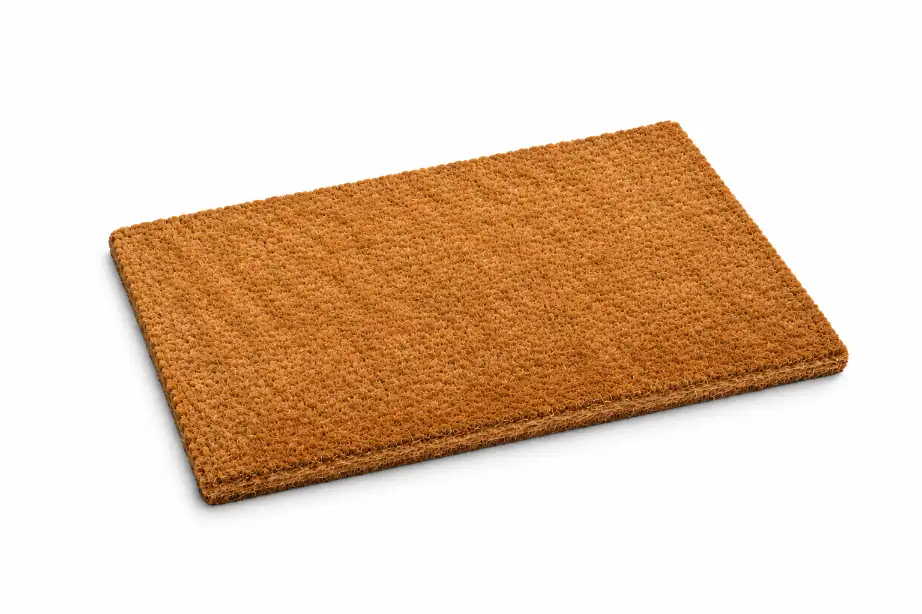
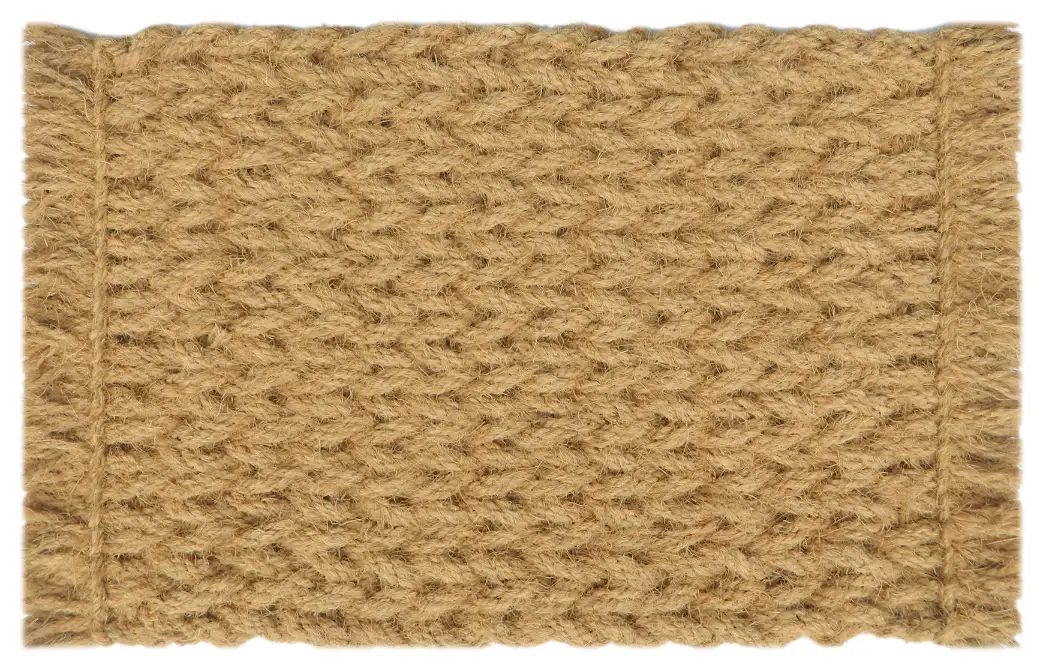
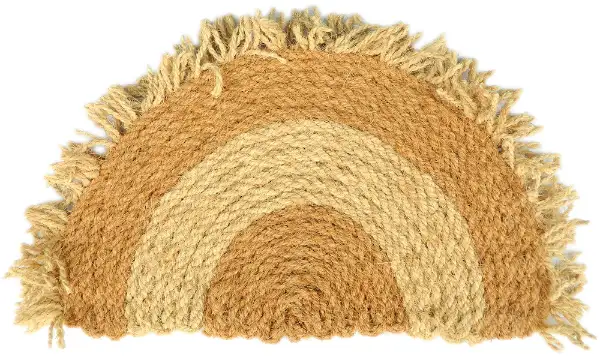
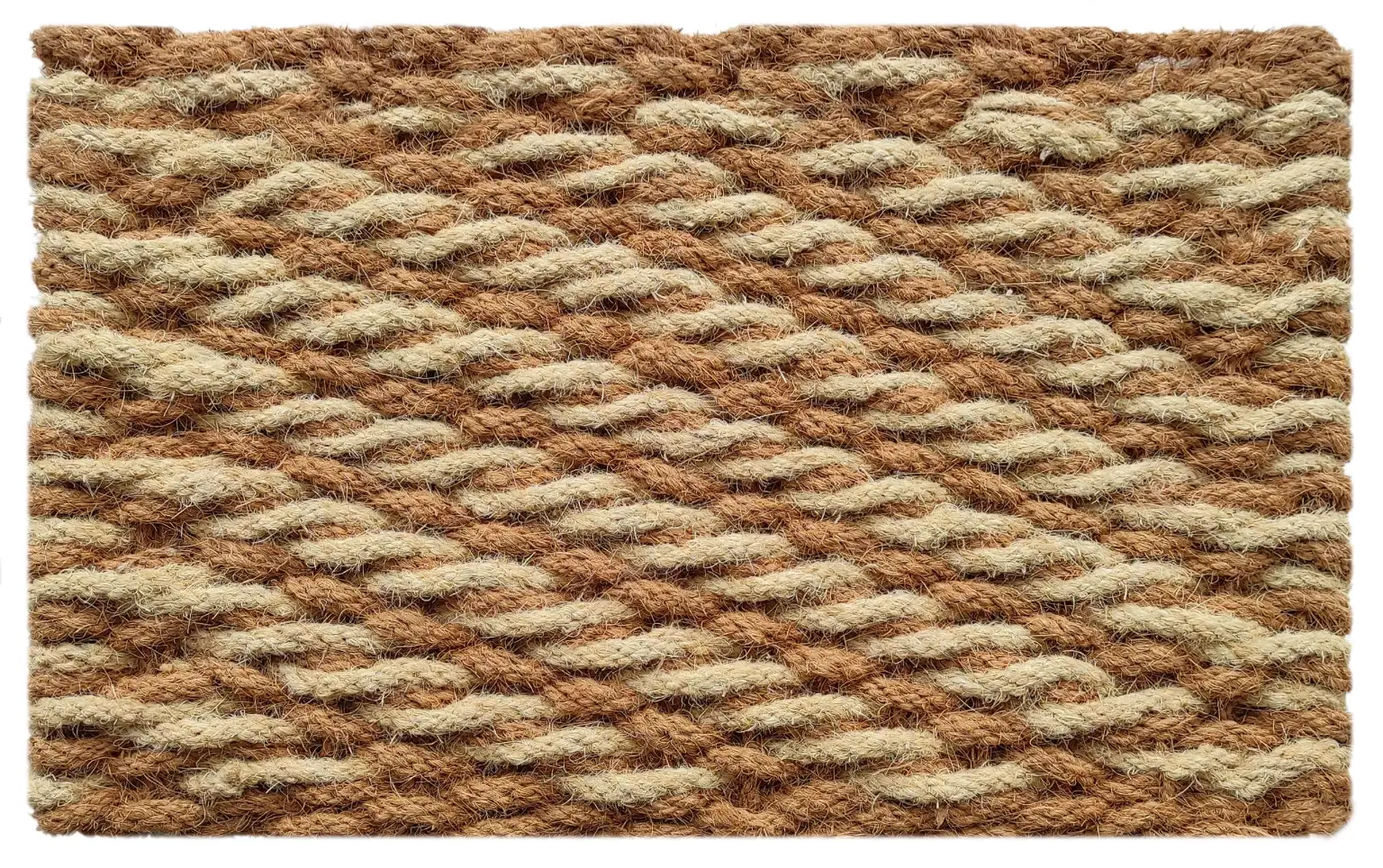
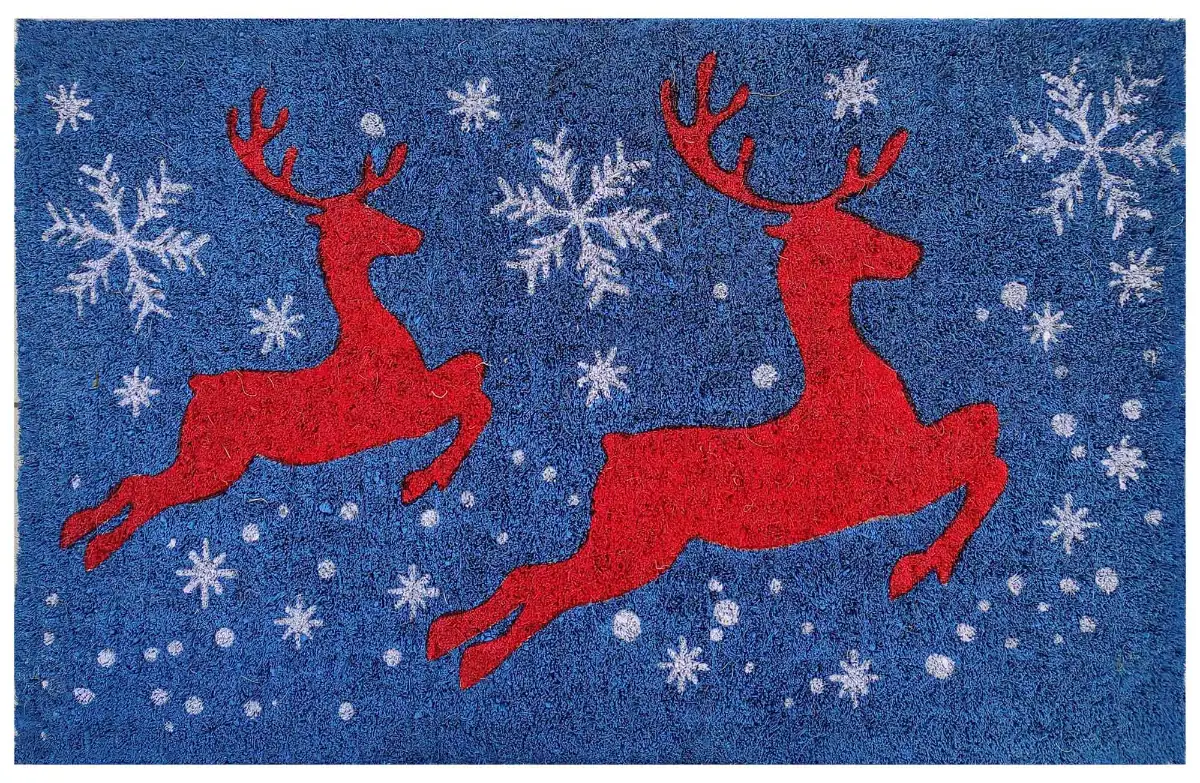
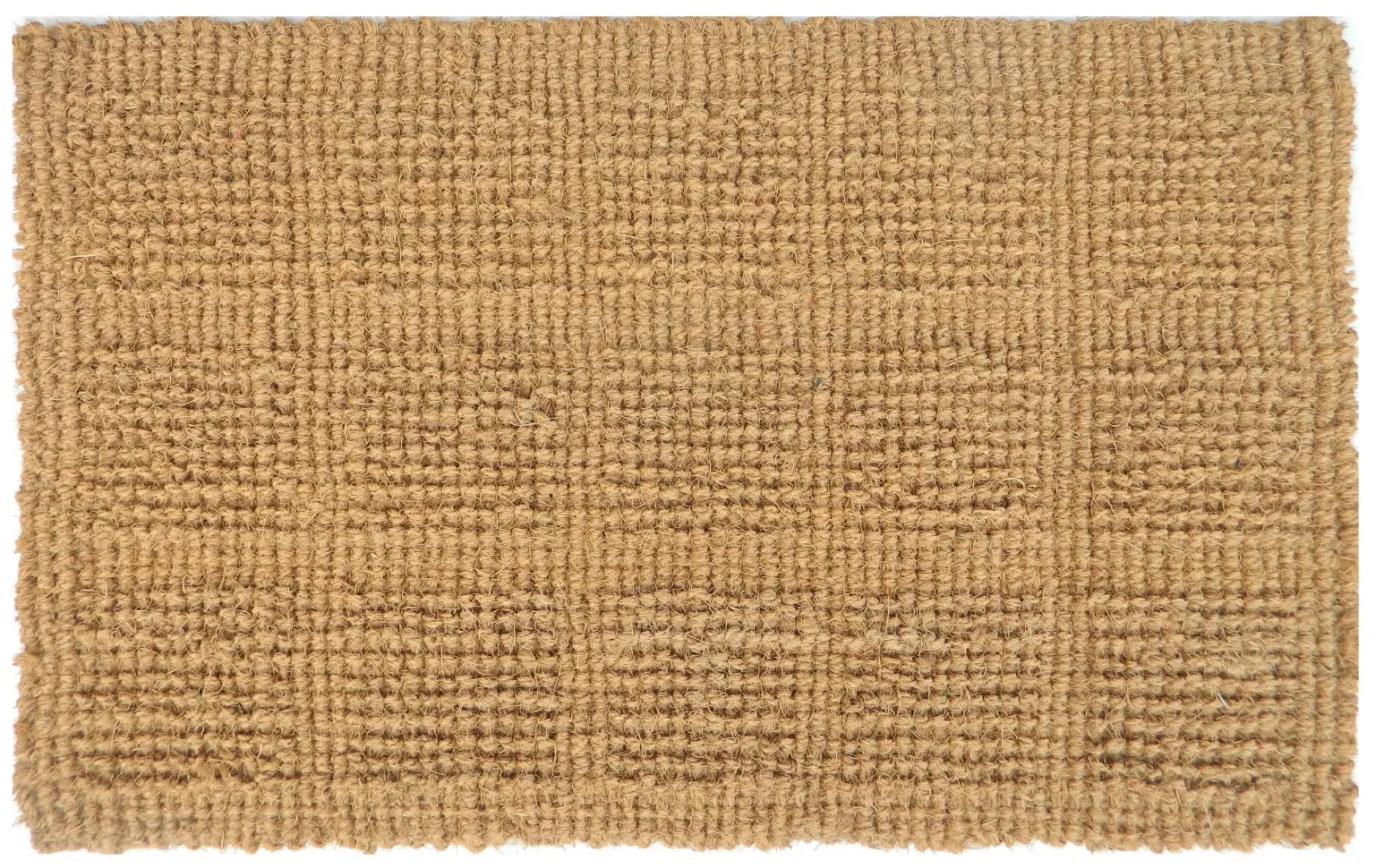
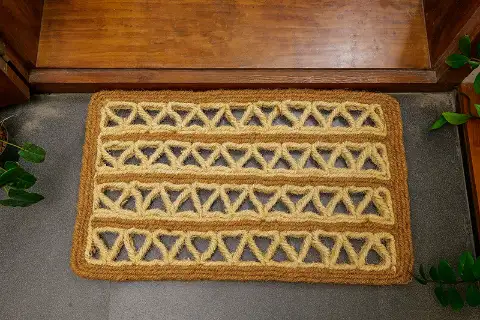
Coir doormats are hand-woven or tufted floor mats made from coir fibre, exploiting the fibre's natural coarseness and abrasion resistance to scrape and trap dirt, grit and moisture from footwear at building entrances. Fibre-only mats are woven flat on traditional looms, while heavier-duty entrance mats are tufted through a PVC, rubber or latex backing sheet that adds dimensional stability, slip resistance and a non-shedding edge.
Uses: residential and commercial entrance matting, hotel and retail lobby entrances, office and public-building entryways, porch and outdoor step matting, boot-scraper/utility entrances
Specification:
Distinctive properties
Coarse, hard-wearing fibre surface scrapes and traps dirt and grit effectively from footwear
Naturally absorbs surface moisture while resisting rot better than softer natural fibres
PVC/rubber-backed variants add non-slip grip and dimensional stability on hard flooring
Fully biodegradable/compostable in fibre-only (unbacked) constructions
Hand-woven or tufted in a wide range of sizes, weaves and printed/inlaid designs
Durable in high-footfall commercial entrances when backed and edge-bound
Material : 100% coir fibre (fibre-only); or 60% coir fibre tufted through 40% PVC, rubber or latex backing
Form/Type : Woven flat mat (plain, printed or inlaid) or tufted mat on flexible backing sheet
Dimensions : Standard sizes 40 x 60 cm, 45 x 75 cm, 18 x 30 in, 16 x 24 in; custom sizes and roll widths up to 2 m for cut-to-size matting
Thickness : Approx. 14-24 mm depending on weave/backing grade
Backing Option : Natural/fibre-only edge, PVC-backed, rubber-backed or latex-backed; plain or bevelled edge trim
Key mechanical property : Dirt/moisture scraping performance and slip resistance comparable to commercial entrance matting; backed grades rated for heavy foot traffic
Lifespan/Degradation period : Functional life 2-4 years in covered/commercial use depending on footfall; fibre-only mats compostable at end of life
Request a Consultation
Tell us about your project — we'll be in touch within five business days.