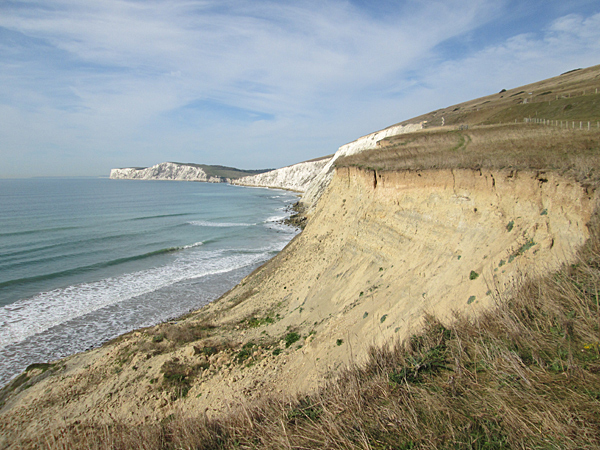
Shoreline and dune systems designed to work with natural coastal processes, helping dissipate wave energy, retain sediment and support the resilience of vulnerable coastal landscapes
The Challenge
Coastal environments are dynamic systems shaped by waves, currents, wind, sediment movement and vegetation. Interventions that ignore these processes can create unintended impacts elsewhere along the shoreline.
Wave and tidal energy stripping sediment from dunes and beaches
Wind erosion of exposed sand surfaces
Loss of dune vegetation and habitat
Pressure from coastal access and recreational use
The need for protection that avoids rigid structures which can accelerate erosion on neighbouring stretches of coast
Our Solution
FloraVeld uses nature-based systems designed to work alongside coastal processes, helping protect vulnerable surfaces, retain sediment and support vegetation establishment where appropriate. Coir's natural resistance to salt water means it degrades more slowly underwater and in intertidal zones than in freestanding soil, so it continues to function through repeated wave-lap exposure for as long as it is needed.
Where It Applies
Dunes
Beaches
Shorelines
Coastal Slopes
Coastal Access Areas
Dunes
Beaches
Shorelines
Coastal Slopes
Coastal Access Areas
Technologies
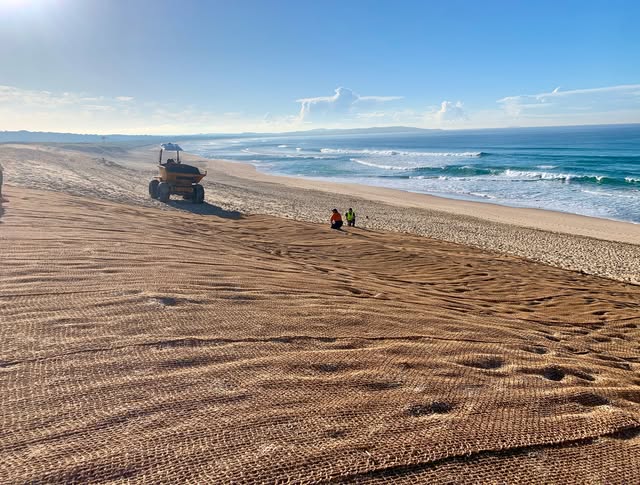
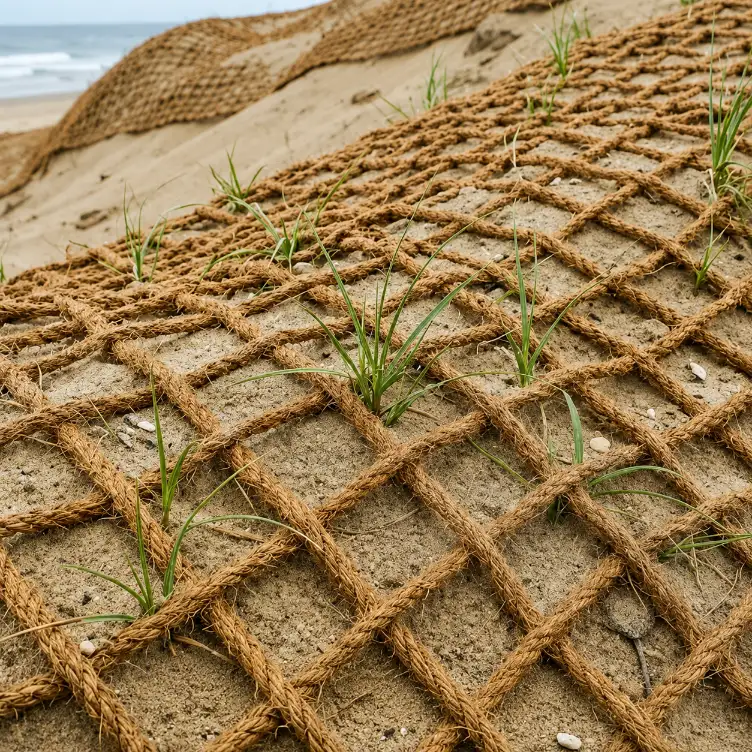
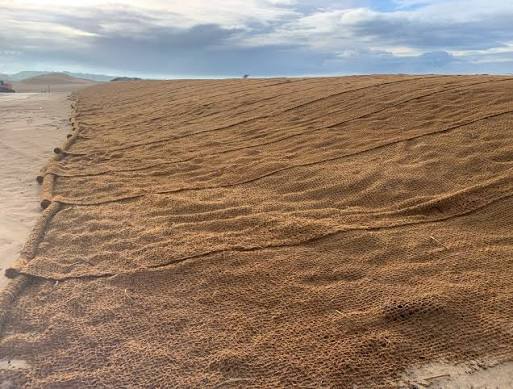
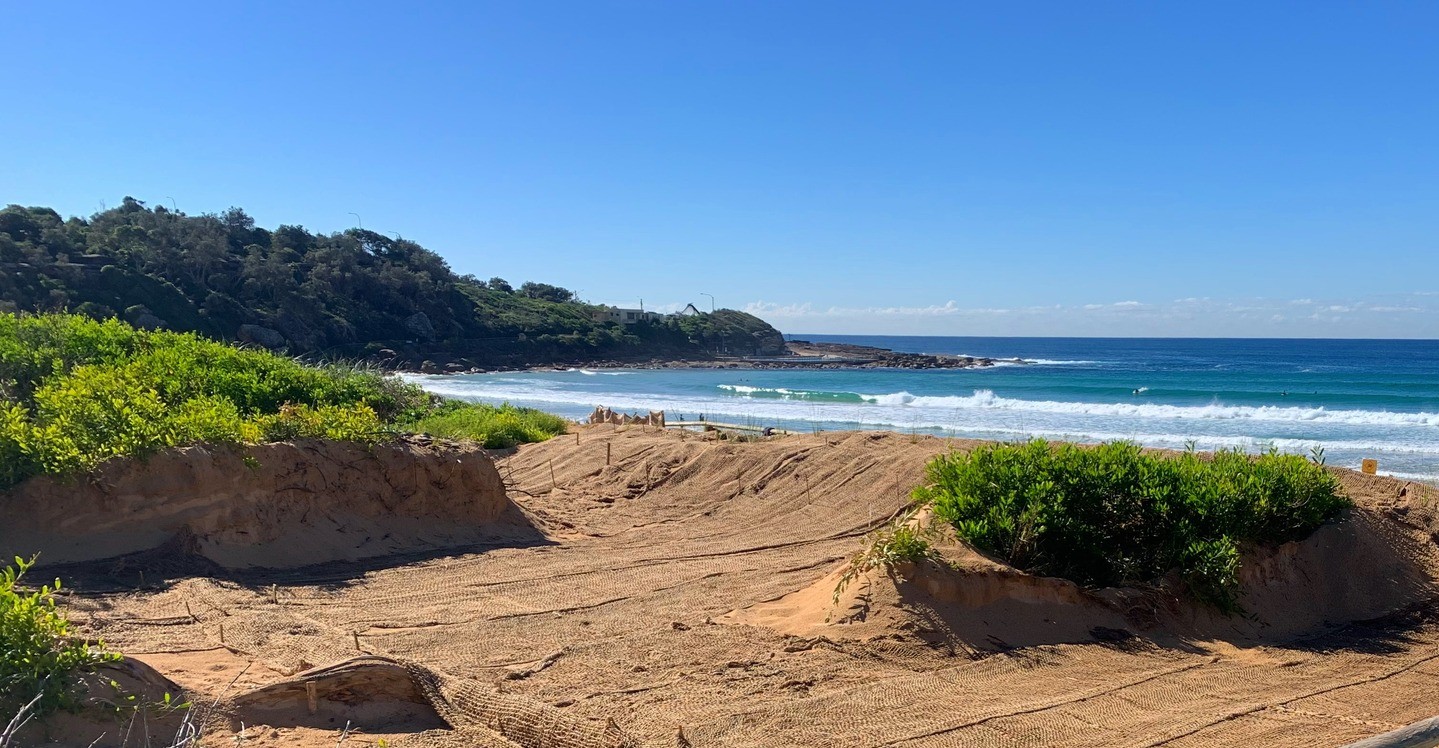
Coir Geotextiles & Mats
Surface protection and erosion control across dune faces and access paths.
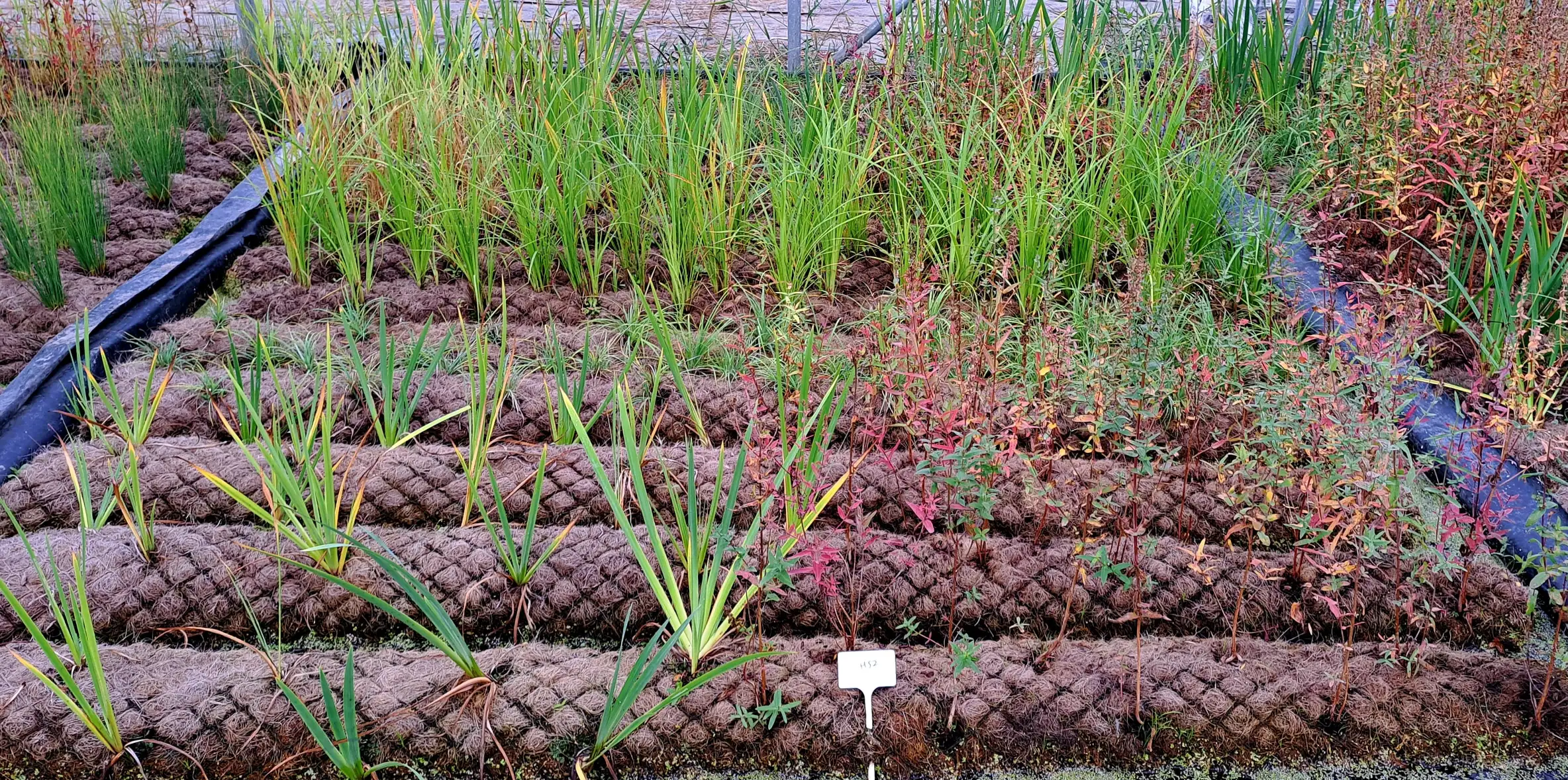
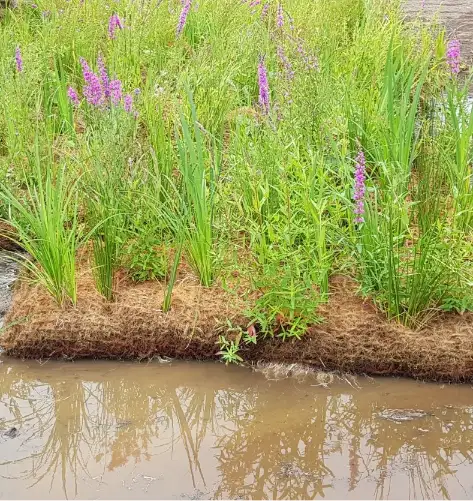
Coir-Based Shore Protection using Cocologs
Localised protection and sediment retention at the bank or dune edge, staked in place and stacked where extra height is needed.
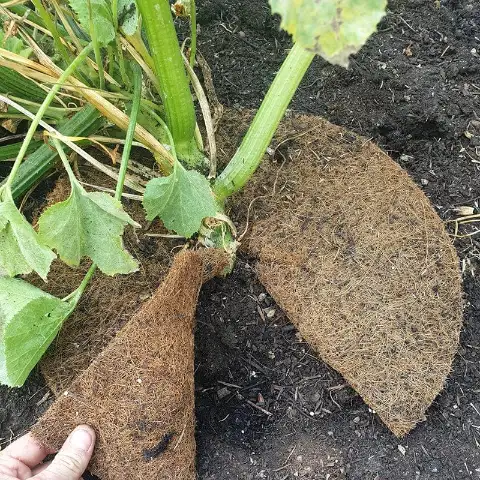
Pre-Seeded Coir Systems
Pads of coir fibre with locally sourced seeds sandwiched between coir nets to promote stable vegetation.
Coir Mulch Mats
Support for vegetation establishment on stabilised dune surfaces.
How It Works
Protect
Surface systems installed to shield exposed sand and soil from immediate wave and wind action.
Retain
Cocologs, bags and fibre beds positioned to dissipate wave energy and hold sediment in place.
Vegetate
Planting introduced once surfaces are stabilised.
Resilience
Vegetation roots and natural sediment accretion take over the stabilising role as the coir elements degrade.
Key Benefits
Surface erosion control on dunes, beaches and coastal slopes
Support for sediment retention rather than sediment loss to adjacent stretches of coast
Protection of vulnerable dune surfaces during establishment
Vegetation establishment supported by moisture retention in the coir
A softer, lower-cost alternative to concrete revetments that still dissipates wave energy effectively
Support for long-term coastal resilience without introducing synthetic microplastics
Request a Consultation
Tell us about your project — we'll be in touch within five business days.